

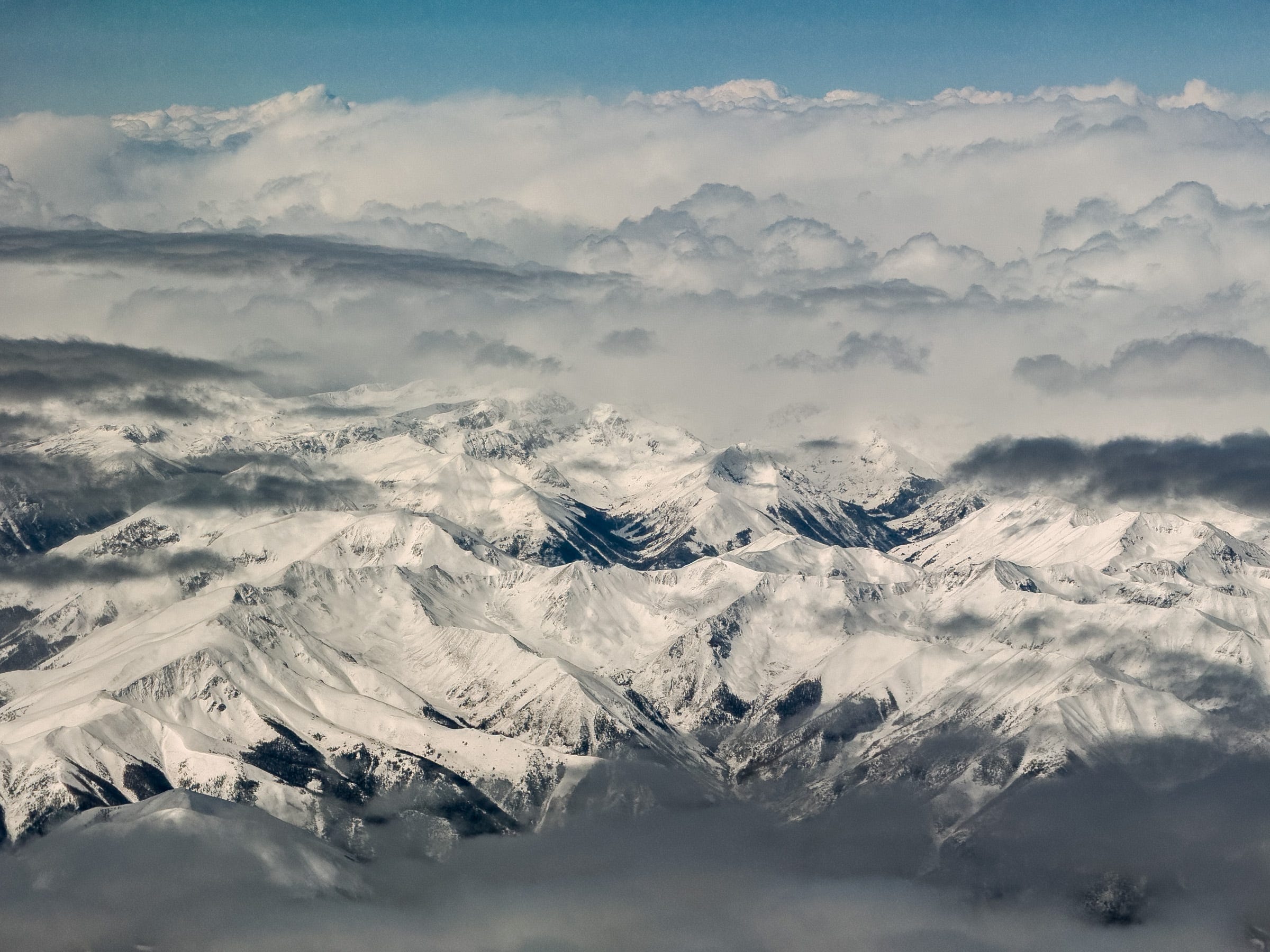
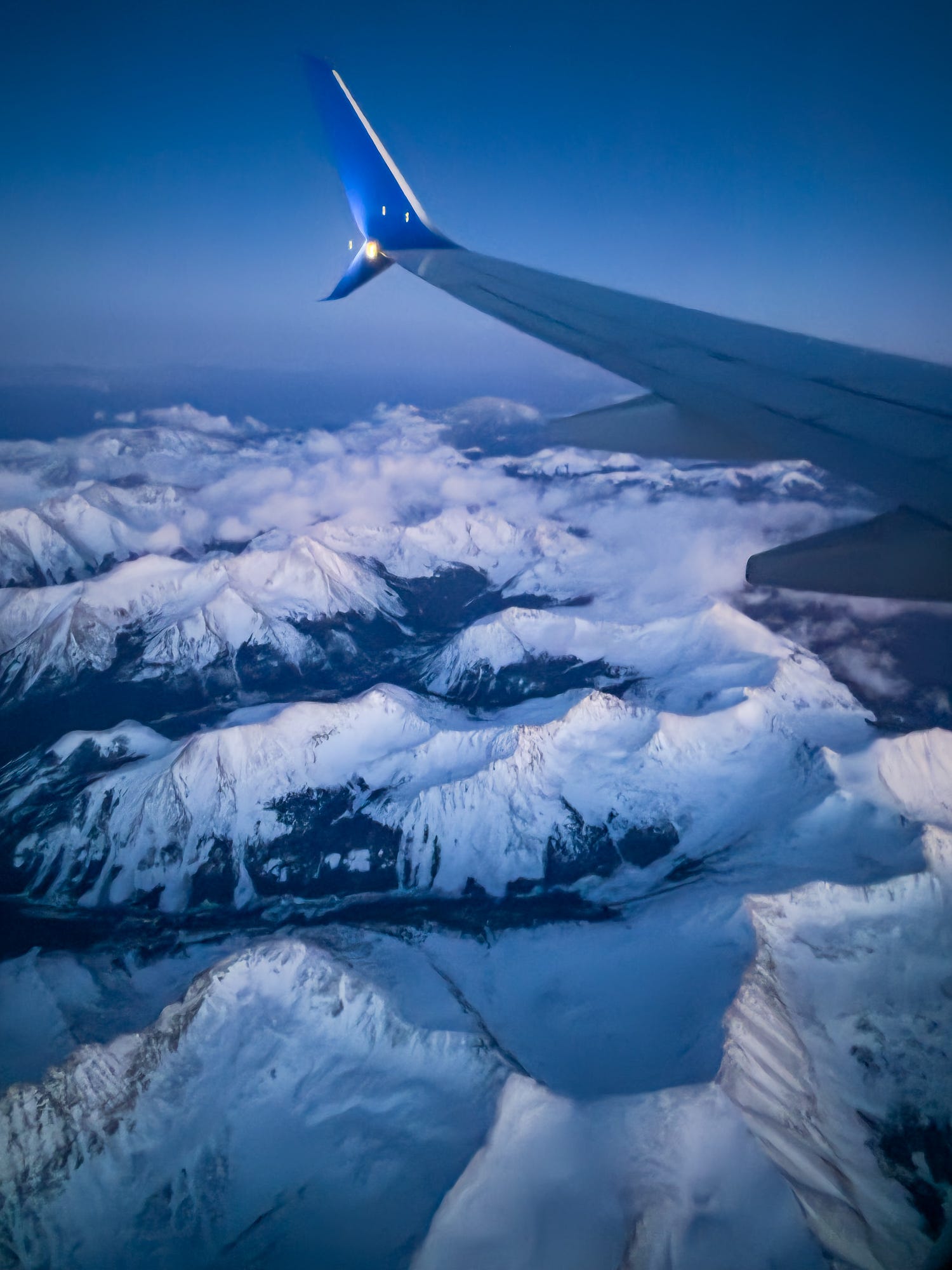
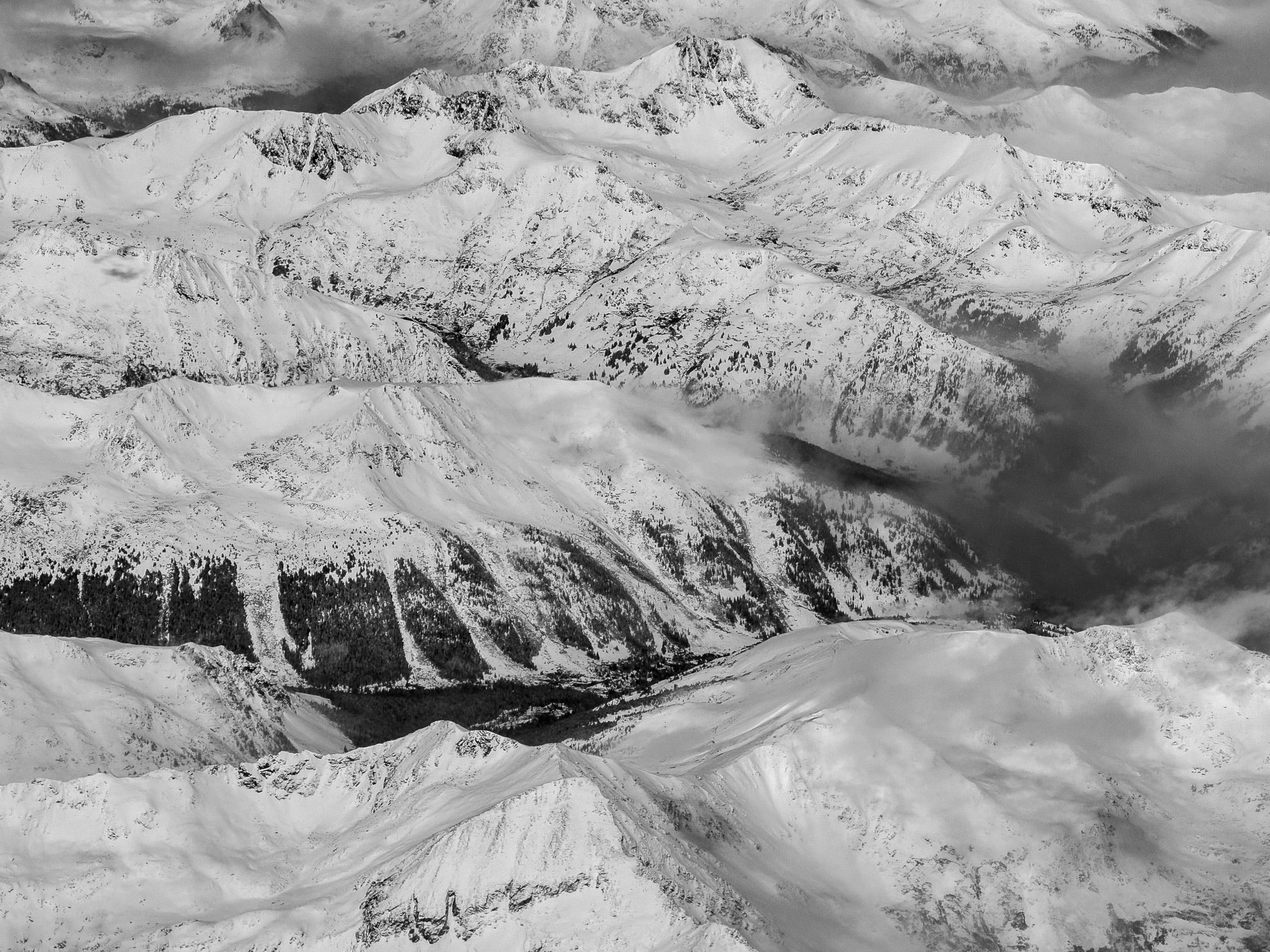
My dad died on April 6, and I took some time off. Below, I write about how he helped set me on this path. But first, an update on the persistent snow drought, along with a few stories I’ve been reading and some aerial snowscapes from recent flights.
Late-season storms brought much-needed moisture to parts of the West, but they didn’t come close to erasing the deficit. The snow drought continues to make headlines due to its intensity and implications.
A recent federal update shared some staggering lowlights:
Arizona, Colorado, Idaho, Nevada, New Mexico, Oregon, Utah, and Wyoming all recorded record-low snow water equivalent on April 1 (since SNOTEL monitoring began in the 1980s). California logged its second-lowest value.
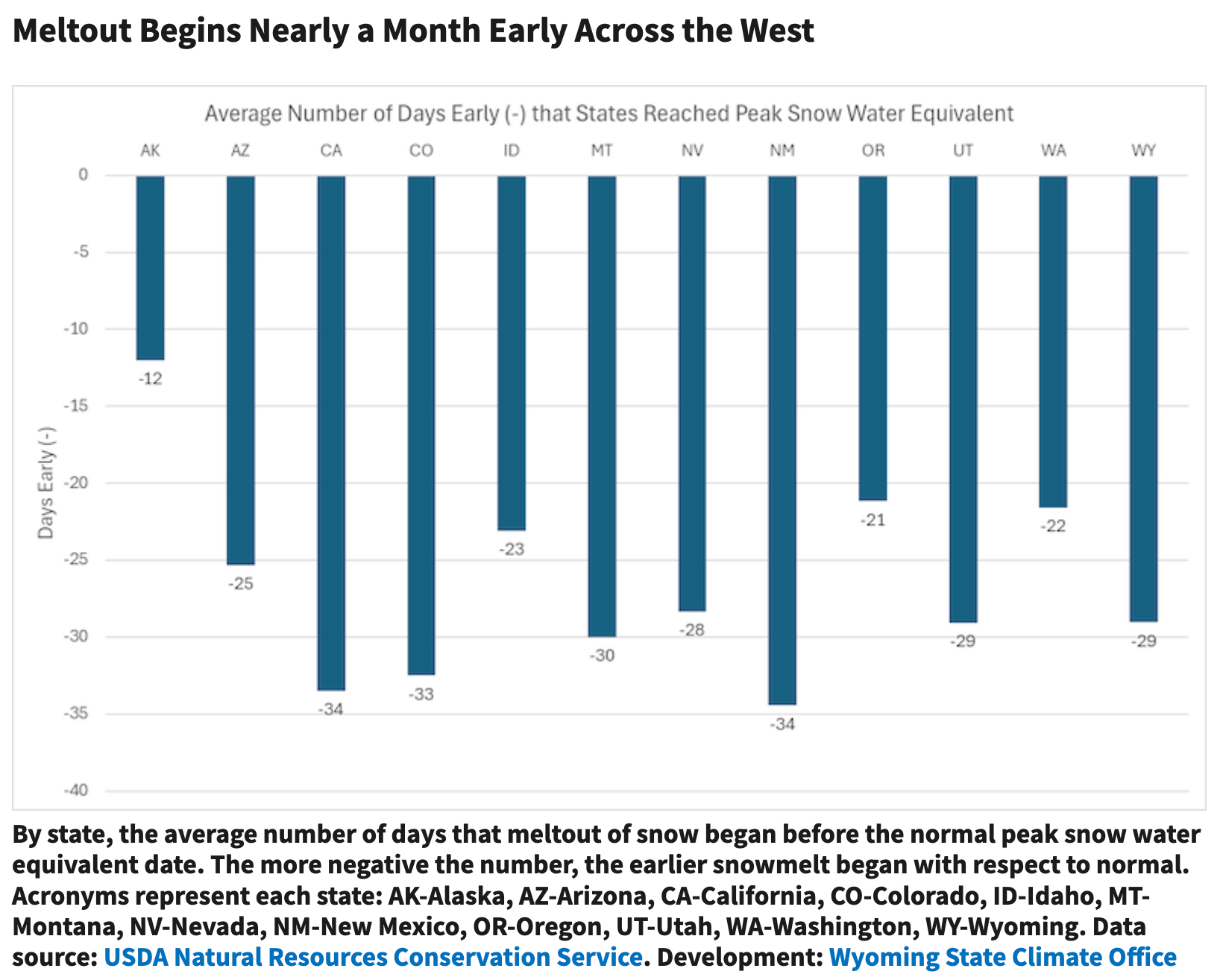
Peak snowpack across Western states averaged 21–34 days earlier than normal, with some basins recording even larger anomalies. For example, the Upper Pecos watershed in New Mexico reached its maximum 55 days earlier than normal, while the South Platte in Colorado crested 40 days earlier than normal.
The graphic below from the National Integrated Drought Information System shows how much earlier the meltout began in each Western state.
Here’s the latest basin-level view of snow water equivalent in the West. Not good!
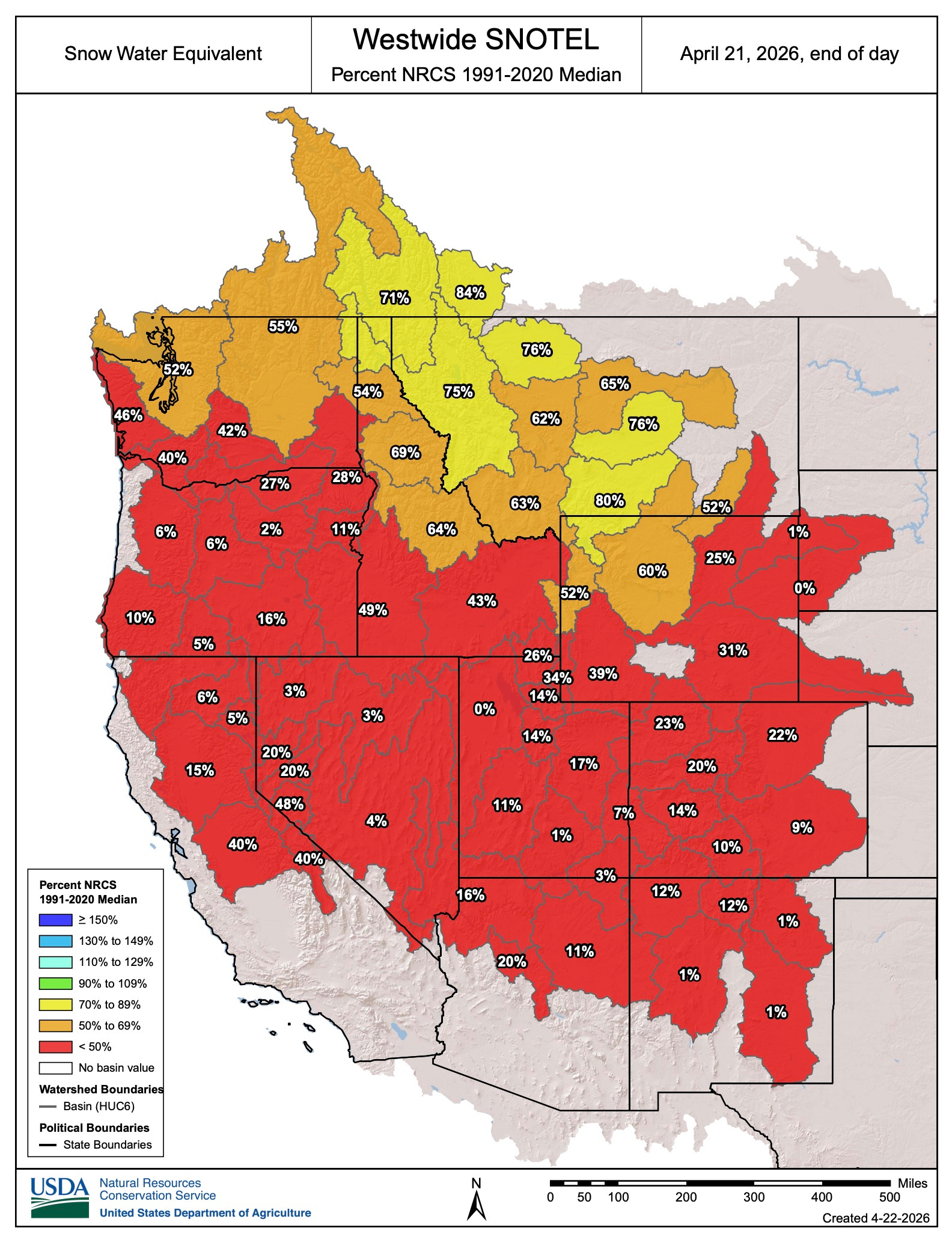
(One caveat: these basin maps can mislead at the very start and end of the season, when the snowpack is normally thin and a single storm can skew the percentages.)
I’m always on the hunt for a good snow graphic, and I recently found a new source: Penn State’s seasonal snowfall maps.
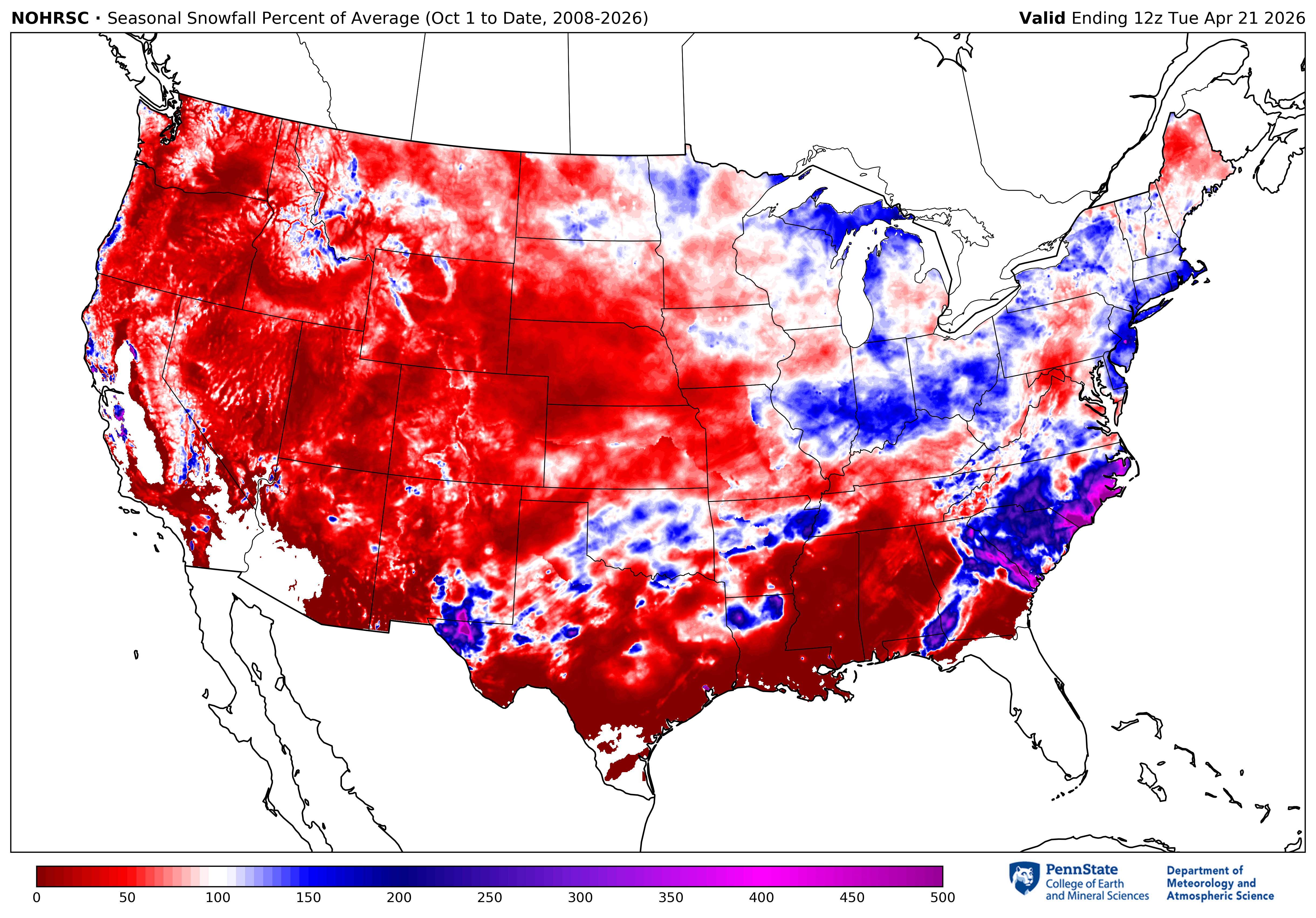
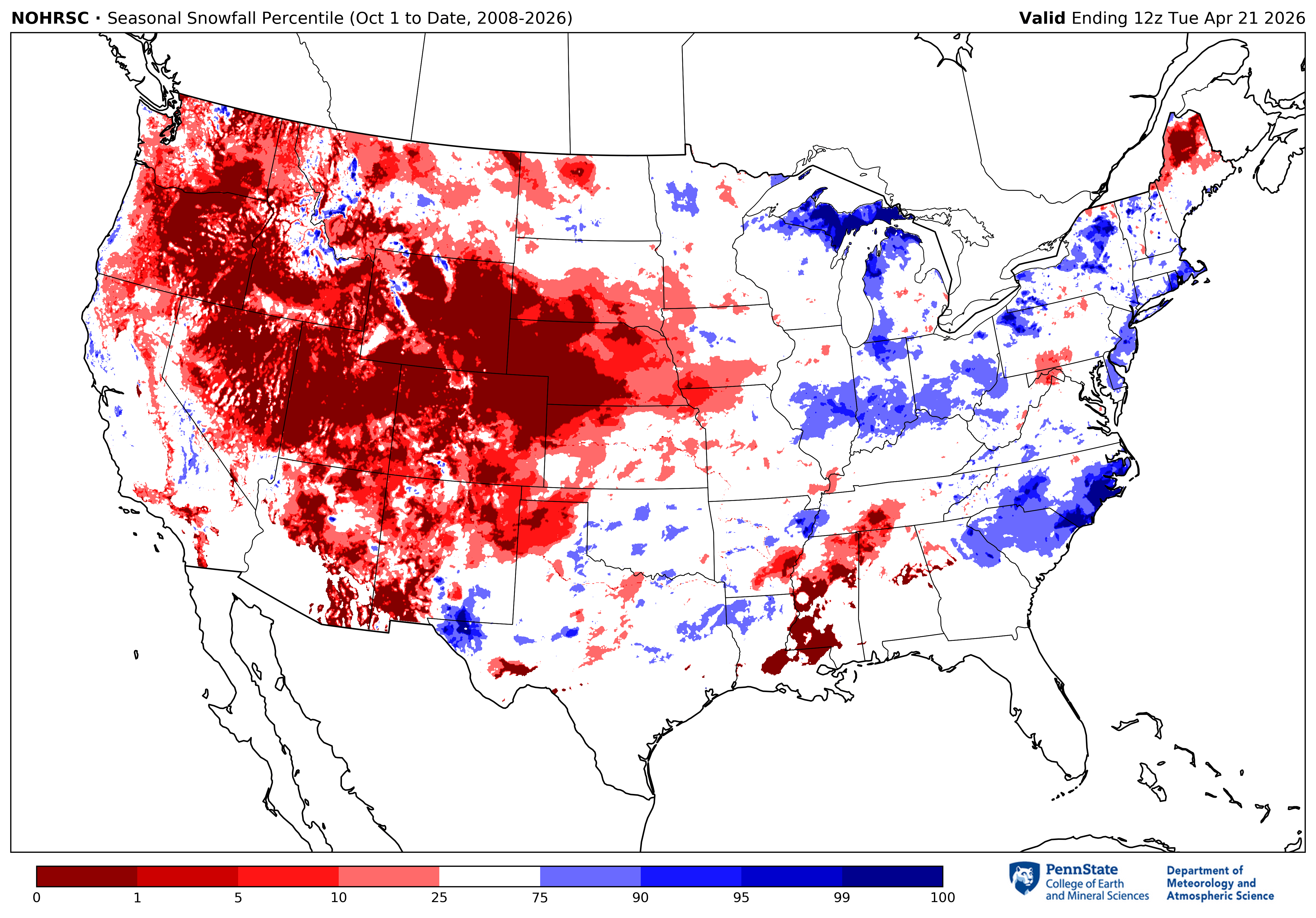
The two images below, based on data from NOAA’s National Operational Hydrologic Remote Sensing Center, illustrate snowfall so far this season (starting October 1). The top map shows the percent of average (2008 to present); the bottom one depicts the percentile. Either way, it’s been a dreadful snow season across much of the West.
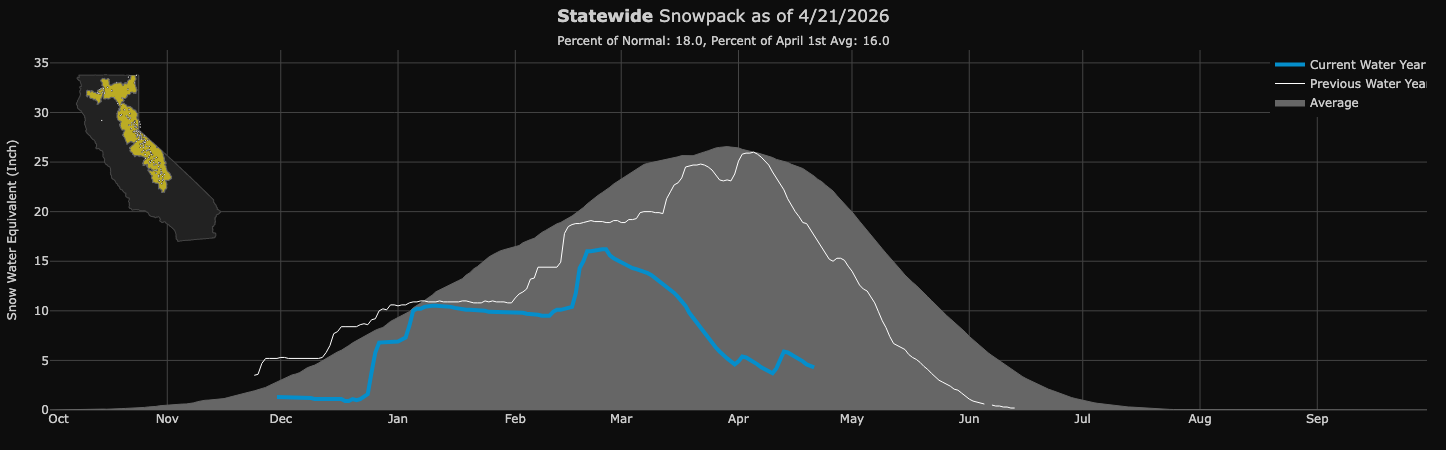
In California, recent storms halted the freefall in the snowpack and caused the blue line below to bounce, but the statewide level was just 18% of normal on April 21.
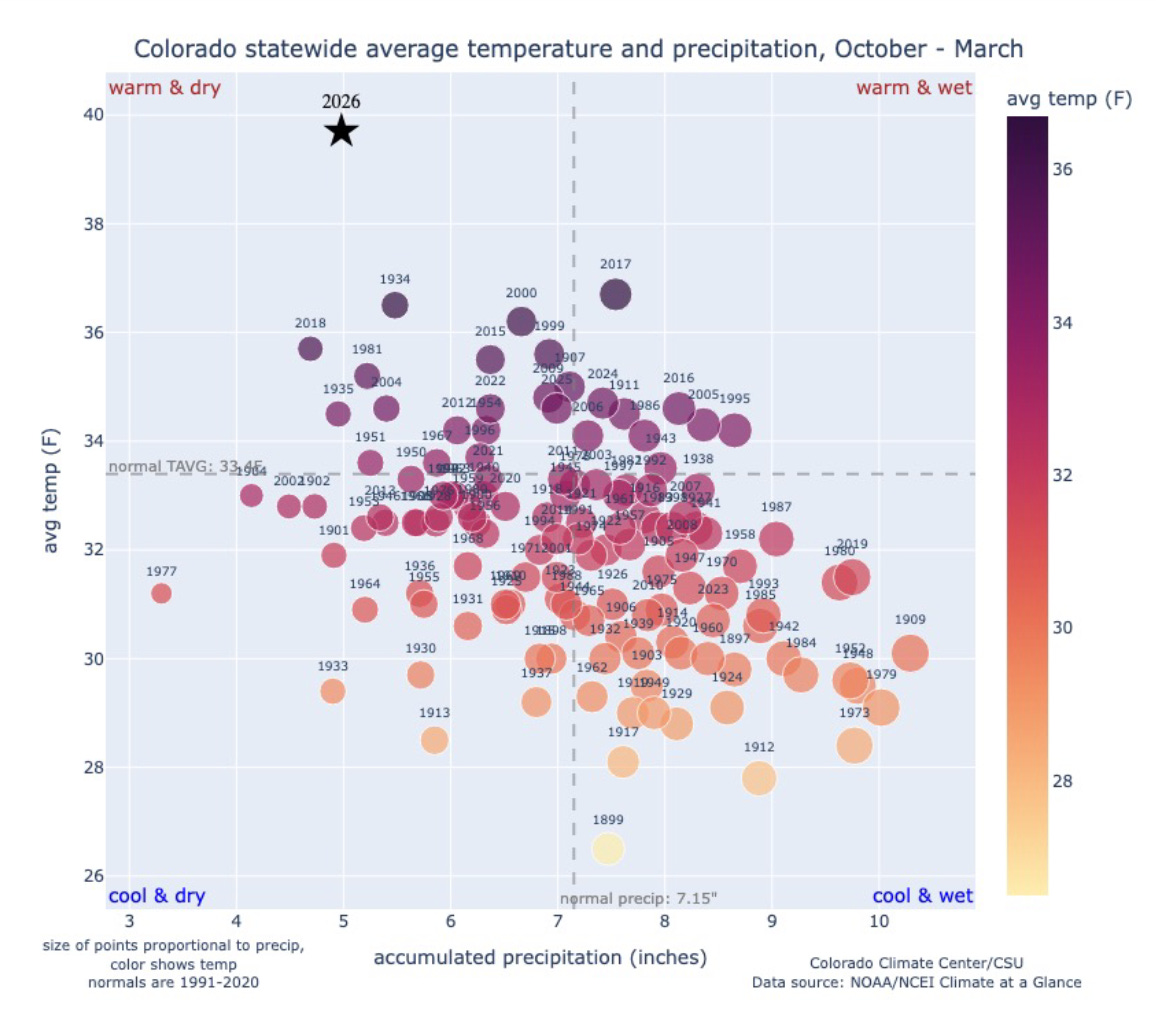
This water year in Colorado has been a real outlier. The scatterplot below from the Colorado Climate Center shows average temperature on the vertical axis and precipitation on the horizontal axis for October through March. The star marks the current season, which has been exceptionally toasty. A few other water years have been drier, but none have come close to the warmth we’ve seen.
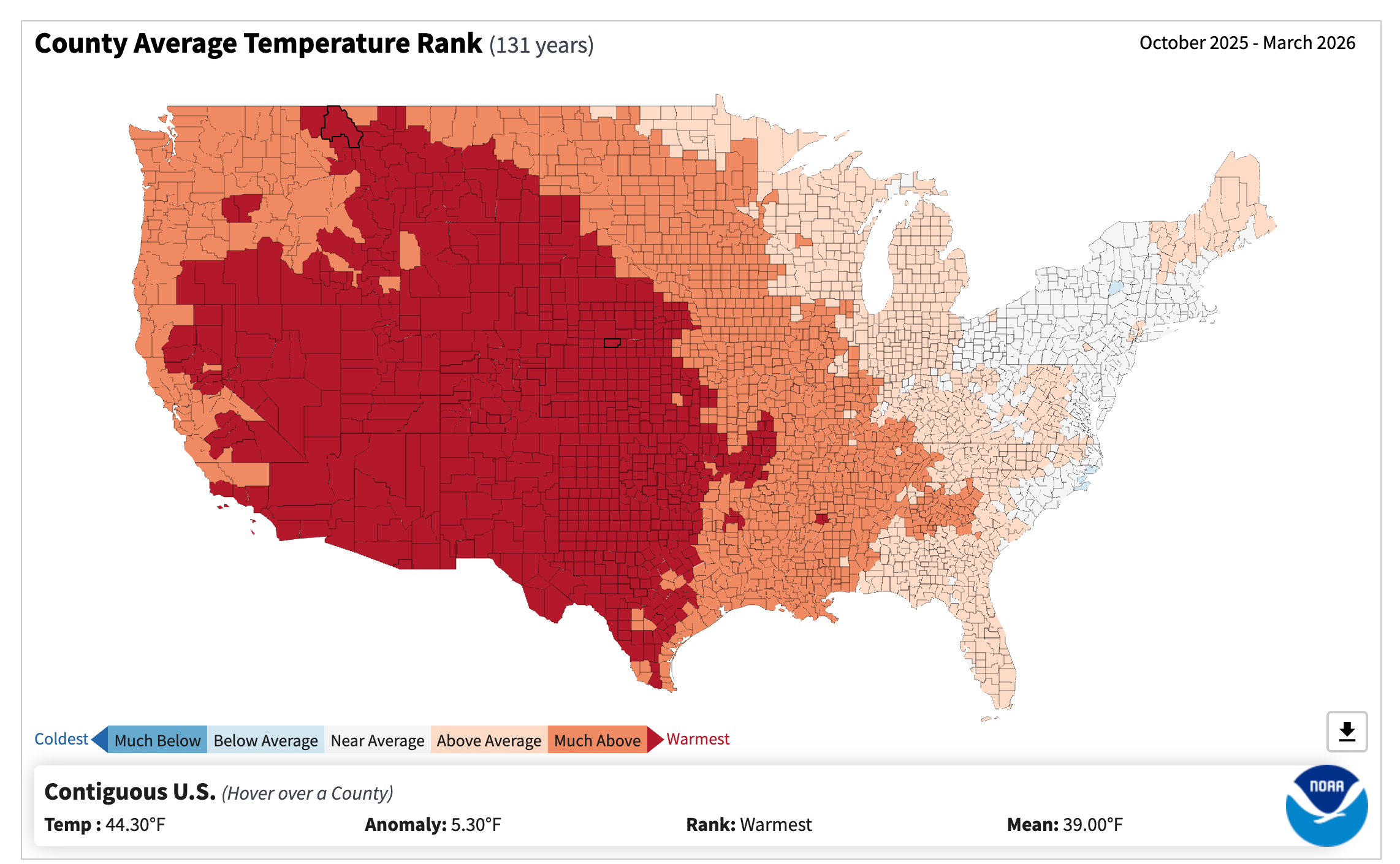
It’s not just Colorado. The NOAA map below shows that temperatures in October through March were the warmest since 1895 across a broad swath of the West.
Snowpack in the news: a reading list
The epic snow drought has caused journalists to flood the zone and produce a blizzard of articles about the meager snowpack’s impacts. Here are a few recent stories worth your time:
Facing Drought and Low Snowpack, Rio Grande States Expect a ‘Challenging’ Year. Martha Pskowski, Inside Climate News, 4/20/26.
The West’s snow drought meant record dryness — but also record flooding. Anna Marija Helt, High Country News, 4/14/26.
Mental health stressors peak in Colorado mountain communities as the winter-that-wasn’t melts into offseason. Jason Blevins, The Colorado Sun, 4/13/26.
Oregon ski resorts adapt to shrinking snowpack amid rough season. Joni Auden Land, Oregon Public Broadcasting, 4/12/26.
Why scientists still use a milk scale and antique aluminum tubes to track Colorado’s record-low snowpack. Sam Brasch, Colorado Public Radio, 4/6/26.
Record low Colorado mountain snow won’t bode well for water in the drought-stricken US West. Mead Gruver and Brittany Peterson, Associated Press, 4/1/26.
‘On a whole other level’: rapid snow melt-off in American west stuns scientists. Gabrielle Canon, The Guardian, 4/1/26.
No snow. No water. Restrictions grow across West as drought fears rise. Trevor Hughes, USA Today, 3/30/26.
Across the West, Record Heat Is Colliding With a Snow Drought. Mira Rojanasakul, Scott Dance, and Sachi Kitajima Mulkey, The New York Times, 3/21/26.
This may be the season when “snow drought” finally entered the public’s lexicon, joining such terms as “atmospheric river” and “bomb cyclone” that were once confined to weather nerds.
Earlier this season, I’ll admit that I felt a little territorial as my precious microbeat—the West’s snowpack—started attracting coverage from major news outlets. But I’ve gotten over myself. This is exactly what should happen when conditions get this bad. If anything, it’s encouraging: the story is finally breaking through, and it couldn’t matter more for the region’s future.
Remembering my dad—and the Yiddish Alps
My dad, Paul Tobin, died April 6 at age 91 after a long struggle with dementia.
In many ways, we said goodbye to him years ago. His passing brings sadness, but also relief that his ordeal is over. Our relationship was complicated, yet we loved each other deeply.
I owe my writing career largely to my late mom, Phyllis, a prolific reader who worked as an editor in Manhattan and did more than anyone to teach me how to express myself with words. But my dad—who I never saw read a single book—helped steer me to become a reporter fascinated with the weather.
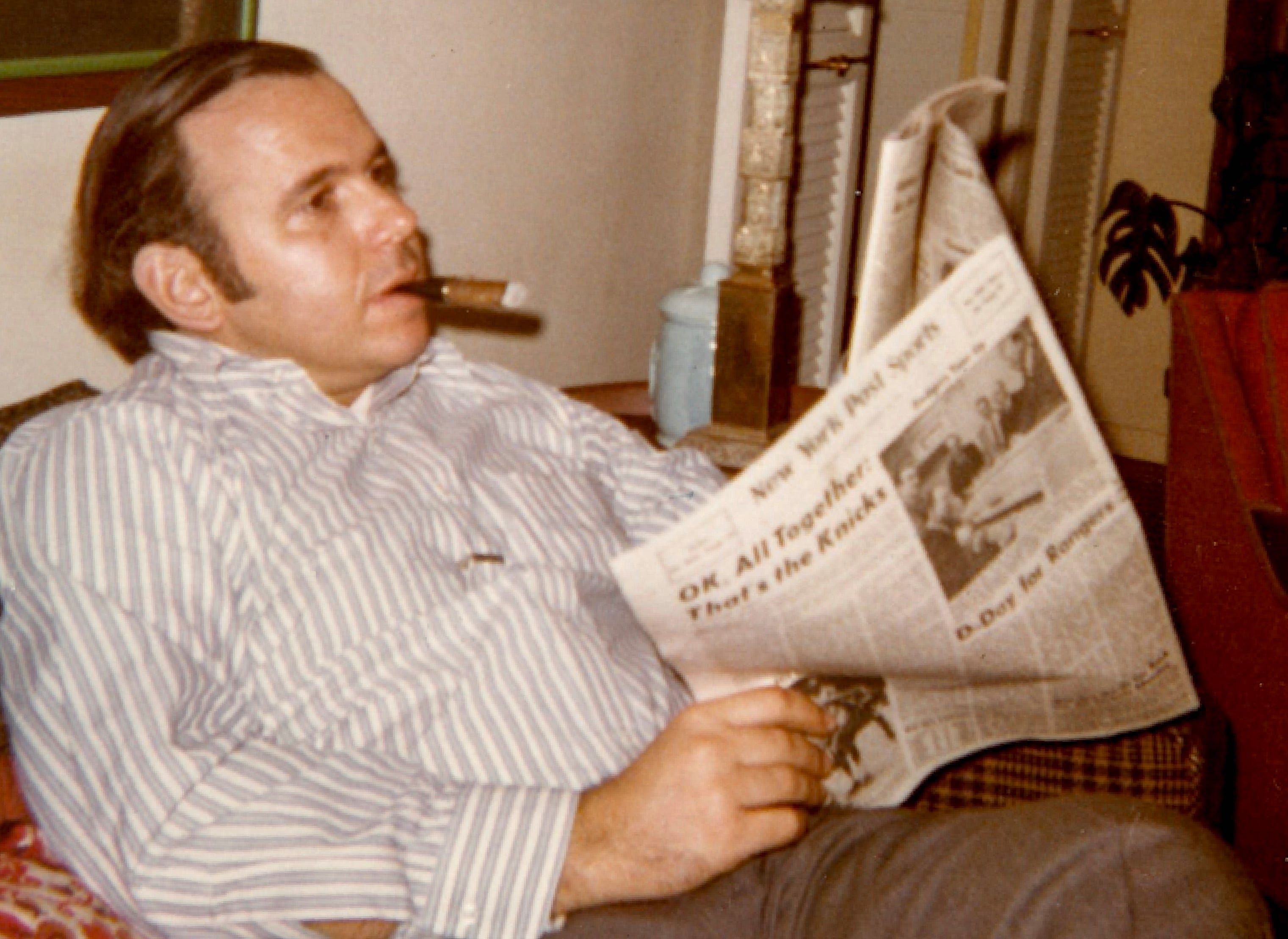
My dad was no intellectual, but his blue-collar mind devoured journalism. WCBS and WINS news radio were the soundtrack to his life—and my childhood. The television was frequently tuned to the local or national news. And our home on Long Island was strewn with newspapers. We got The New York Times and Newsday delivered, and my dad would bring home the New York Post and Daily News tabloids that he’d picked up while working in Manhattan and Brooklyn at Dubrow’s Cafeteria, the family business.
My dad was especially attuned to the weather, which shaped his mercurial moods and fueled a steady stream of colorful commentary. Years later, when I was a newspaper reporter in Tucson, I’d sometimes write about the weather—rain is front-page news there—and it came naturally to me. Today, when I feel that anxious anticipation before a snowstorm, I carry forward his excitement at watching big flakes fall outside the window and betting on whether school would be canceled.
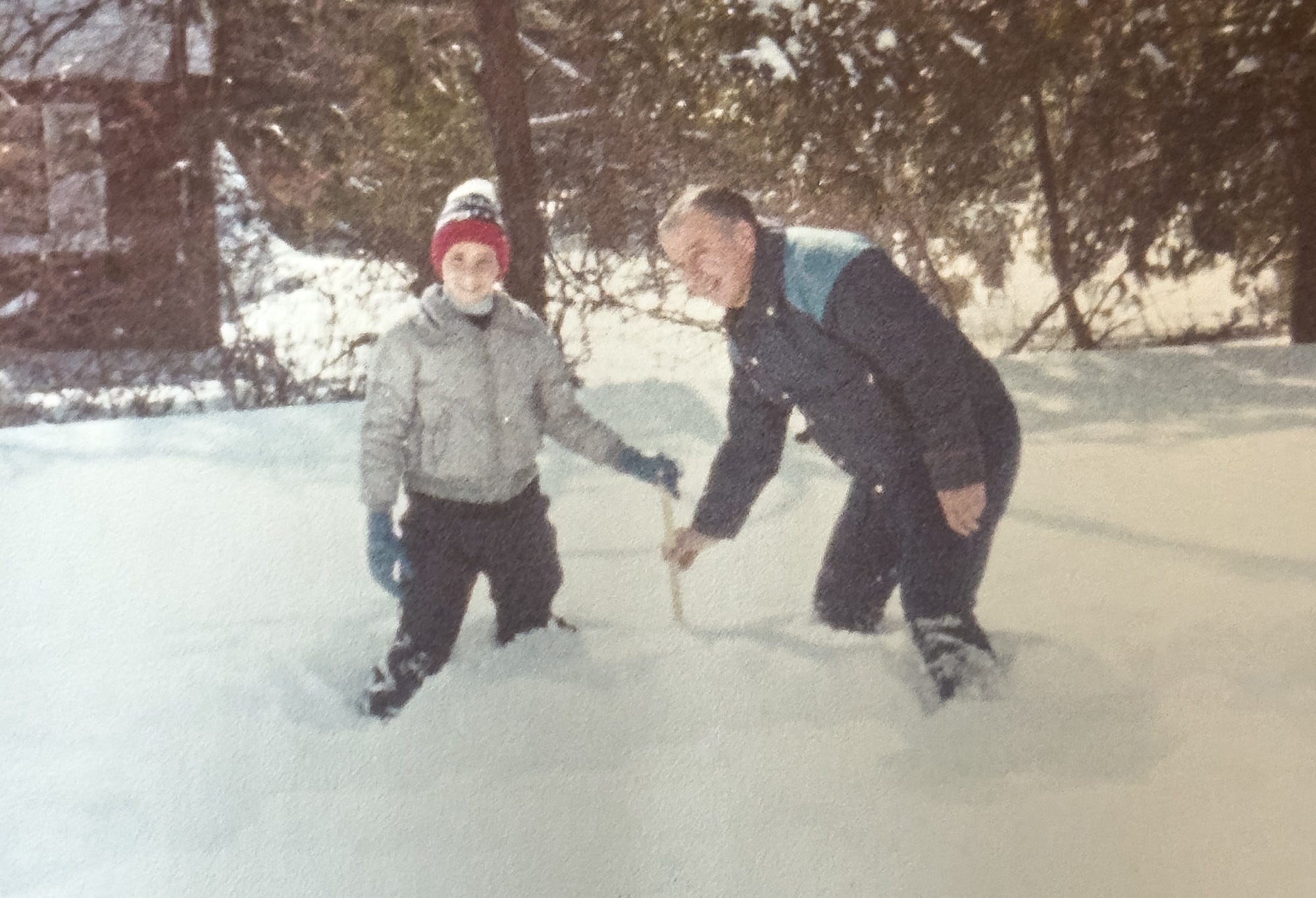
Long Island wasn’t an especially snowy place, but every so often we got walloped by a nor’easter. I’ll never forget riding on my dad’s back as we piloted a primitive Flexible Flyer down Sled Hill near our home in Great Neck. It wasn’t the Rockies, but that hill felt steep. Although Long Island lacks mountains, it owes much of its shape to the terminal moraines of a massive ice sheet that bulldozed southward just a blink ago in geologic time, leaving behind hills of glacial debris.
My dad never even came close to skiing, but he drove us a few times to The Concord Resort, an aging Borscht Belt resort in the Catskills. That’s where I made my first turns on a bunny hill in the 1970s.
I didn’t exactly shred the gnar in the Yiddish Alps, where many Jews from the New York area went to vacation. But those tiny slopes instilled a passion for skiing that I’m still chasing a half-century later. I’m forever grateful to my dad (and mom) for introducing me to a sport they didn’t pursue themselves—and, in their own ways, helping steer me toward a life in journalism.
I'm sorry for your loss, Mitch. Thinking of you.
Beautiful tribute to your dad, Mitch, I’m so sorry but glad to know more about your life and journey into journalism. I dream of having something like a Dubrows nearby