

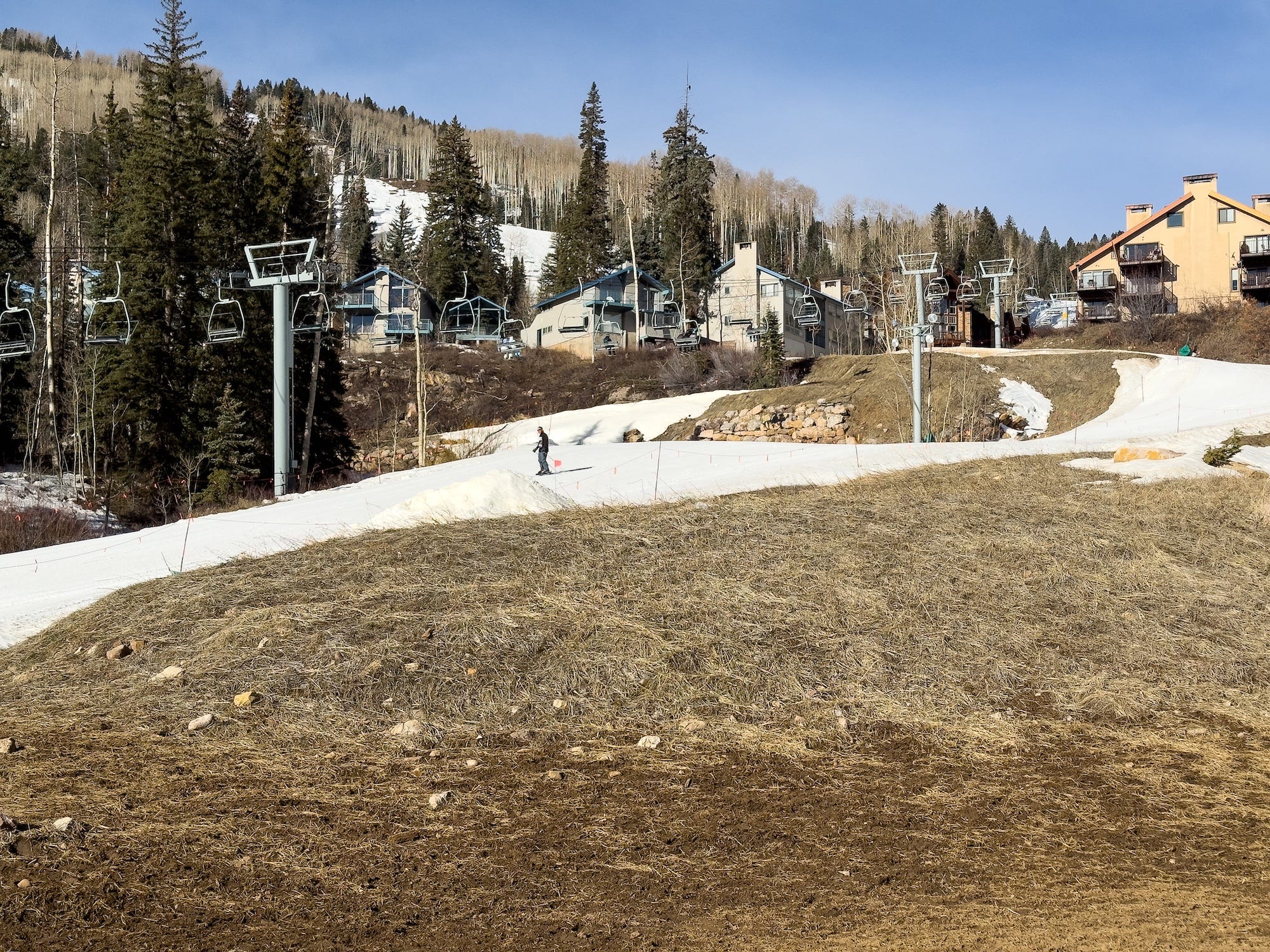
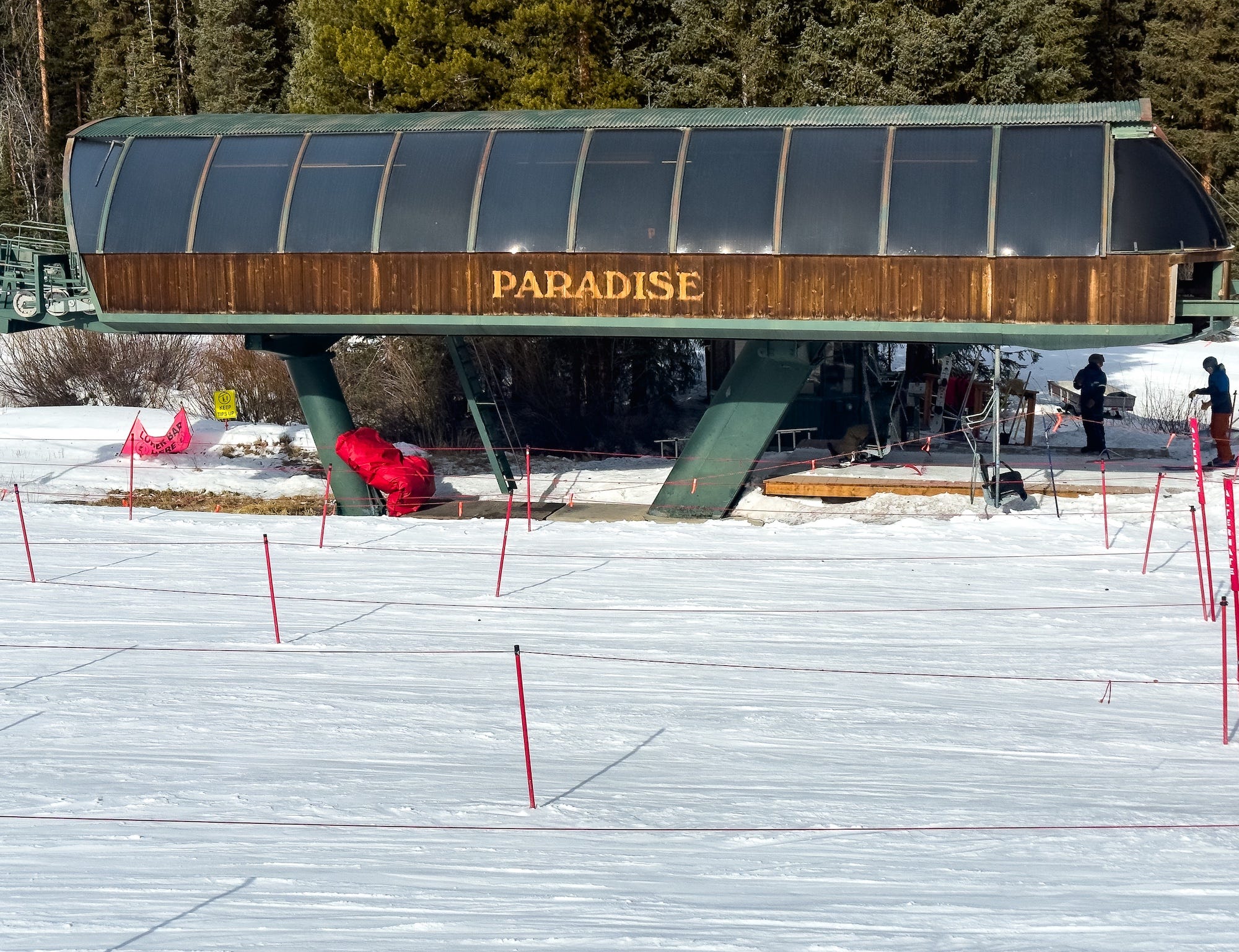
I pitched this short op-ed on the snow drought to a variety of news outlets. Alas, I found no takers. But I’m glad I wrote the piece, and I’m excited to share it with snow.news readers, along with a few photos from my recent ski trip—the swan song of a sad season.
The West’s mountain snowpack has fallen to historic lows this winter amid record-breaking warmth, raising fears of strained water supplies and severe wildfires ahead.
Here in Colorado, it’s been a dreadful season for skiing—and for my skis.
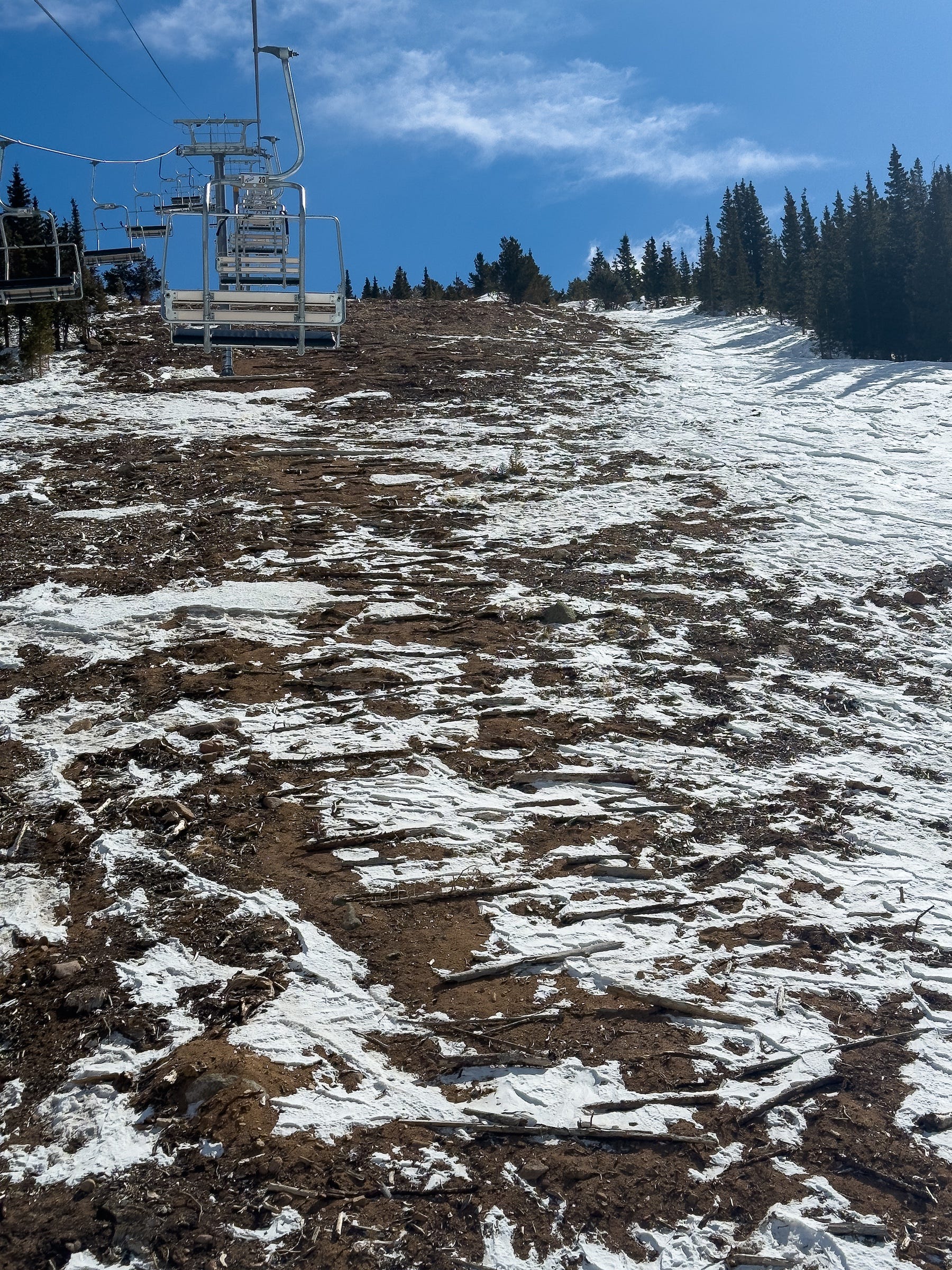
Two miles above sea level, we call the lack of snow cover “low tide” and the underlying rocks “sharks.” Sometimes their fins are visible; other times they lurk just below the surface, ready to strike.
I’d hoped to get another year or two out of my aging skis, but repeated shark attacks this season gouged their bases and then damaged a metal edge beyond repair.
Like a receding ocean unmasking reefs and shoals, a thin year shows us dangers that lie beneath the surface—and how exposed we are.
When our snowpack is meager—or entirely missing—it underscores how much we depend on this seasonal accumulation of ice crystals, even during the summer and far beyond the region.
Besides supplying water for drinking and irrigation, snow sustains ecosystems, underpins the winter sports industry, and fuels local economies. It even cools the planet by reflecting sunlight.
When snow doesn’t fall—or moisture comes as rain due to warmer temperatures—it lays bare the fragility of the infrastructure we’ve built to cope with nature’s perils.
In one of Warren Buffett’s famous quips, we only learn who’s been swimming naked when the tide goes out. Just as falling markets uncover weaknesses in businesses, the shortage of snow is unveiling the West’s vulnerabilities: dire risks of drought and fire, plus the loss of an economic driver and a cherished part of our culture.
Not everyone loves snow. Human “snowbirds” migrate to avoid it, and this winter it delivered misery to parts of the East and South. But in the West, many of us need snow to survive—biologically, financially, and emotionally.
The West’s snowpack serves as a high-elevation frozen reservoir that stores water worth trillions of dollars. Colorado’s snow alone supplies 19 other states downstream, plus Mexico.
If you’re an American who likes salads in winter, you’re probably eating vegetables grown in the desert Southwest with water from the Colorado River, which is mostly snowmelt. This season’s dismal snowpack has only intensified the contentious negotiations over how to manage a river that supplies tens of millions of people but whose flows have already been reduced by warming.
In the West’s forests, scant snow cover heightens the threat of wildfires that can destroy entire neighborhoods and send noxious plumes thousands of miles downwind. A bad season for skiers and snowboarders often means the ensuing summer is good for flames and smoke.
As a 21st-century skier, I’ve learned not to be picky about snow conditions—as my skis will attest—but low-snow years harm businesses and workers tied to winter recreation.
Snow is like white gold for communities that cater to tourists who spend money at hotels, restaurants, bars, and retailers. Downhill snow sports generated about $59 billion in annual economic activity and supported an estimated 533,000 jobs nationwide, according to a 2024 report from the National Ski Areas Association.

Snow is a critical natural and economic resource, yet its value runs deeper when felt through the magic of snowflakes, the thrill of snowball fights, and the muffled beauty of a snow-covered landscape. As a skier and Coloradan, snow is part of my identity.
Sadly, this season’s snow drought is a harbinger of what’s to come in our warming climate. Numerous scientific studies have sounded the alarm about the fate of the West’s snow as temperatures rise.
The federal government’s Fifth National Climate Assessment, released in 2023, found climate change has already shrunk the region’s snowpack. Warming is leading to earlier peaks for accumulation and shorter seasons, especially at lower elevations and closer to the coast. The synthesis of research found “widespread consensus” that further warming will shift precipitation from snow to rain, reduce the snowpack, hasten melting, and reshape runoff patterns.
The West is trying to adapt to a diminished snowpack. Snowmaking has increased at ski resorts, but that requires water, energy, money—and cold enough weather. Many water providers are promoting conservation to stretch scarce supplies. Scientists are improving estimates of how the snowpack translates into streamflows.
Our technical knowledge of the snowpack is expanding, but it’s surfacing uncomfortable truths about how much of our future depends on a threatened resource long taken for granted.
In the Rockies and along the shore, low tide reveals hidden hazards. This season, snow’s absence is stress-testing our systems—and our resilience in a rapidly changing world.
At the risk of being repetitive, please send us your pitches. Betsym@writersontherange.org
Great work you're doing!
Amazing and informative reporting as always, Mitch. This is a tough stretch and it is really helpful to see the data and your perspective. Thank you.