

1️⃣ US skier visits fall off a cliff after the West’s winter that wasn’t
Jason Blevins, The Colorado Sun, 5/5/26
U.S. ski areas recorded a steep drop of 9 million fewer visits compared to last season. The 2025-26 season ranked 32nd out of 48 seasons, according to the National Ski Areas Association.
A good snow year in the East led to increased visitation in that region, “but visits melted in the West as record-high temperatures savaged snowpack,” Blevins writes, adding:
The average snowfall nationally in the 2025-26 season was 112 inches, off 33% from the 10-year average of 169 inches. But the number of days that resorts operated remained flat — around 110 days — revealing the strength and increasing reliance on snowmaking across the U.S. resort industry.
2️⃣ Climate change may complicate avalanche risk across the Pacific Northwest
William Poor, University of Washington News, 3/23/26
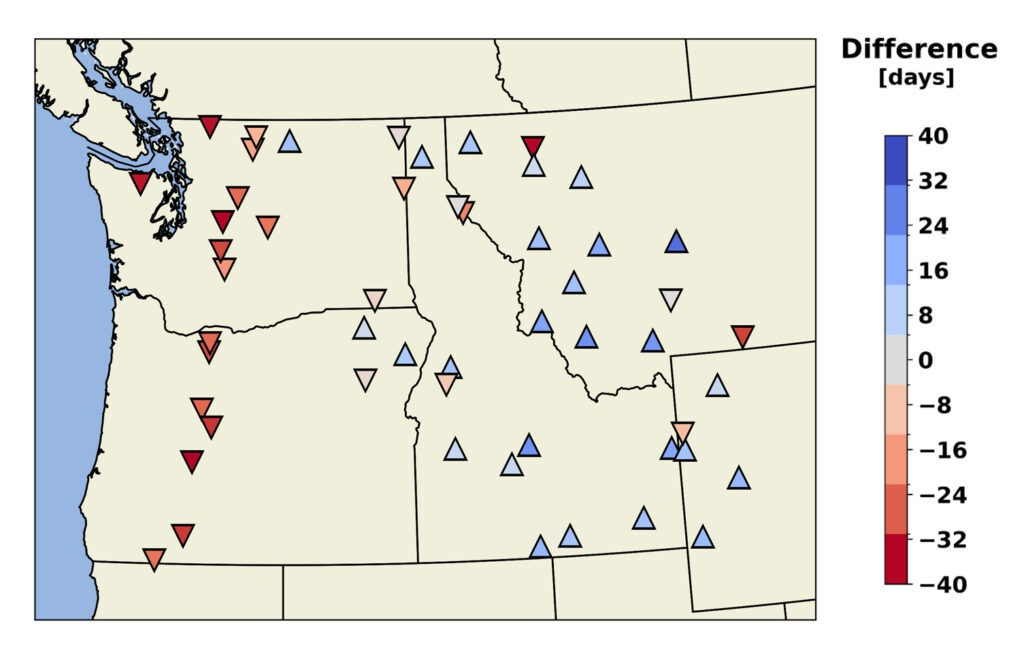
Warming temperatures are expected to shift more winter precipitation from snow to rain, altering snowpack structure and reshaping avalanche hazards in the Pacific Northwest, according to a recent study.
Melt-freeze crusts form when a surface layer refreezes after getting wet from melting or rainfall. Snow accumulating on that icy layer can be prone to sliding, with potentially deadly results.
“This winter’s warmth is a harbinger,” lead author Clinton Alden, a University of Washington graduate student of civil and environmental engineering, said in a press release. “We know that temperatures will keep rising, and our work is a red flag for cooler regions of the greater Pacific Northwest, such as Idaho and Western Montana, that aren’t used to dealing with ice crusts and their resulting avalanche problems.”
While colder, inland locations are expected to see more icy crusts, the maritime Cascades are projected to see fewer crusts because warmer temperatures will inhibit freezing.
“These changes to the snowpack will also impact ecosystem function, with greater snow density altering large mammal movements and predator-prey interactions,” the researchers write.
3️⃣ The U.S. Army’s ‘Big Experiment’ in the Arctic Cold
Greg Jaffe and Kenny Holston, The New York Times, 5/4/26
With the Arctic heating up as a strategic flashpoint and potential military battleground, The New York Times asks: “How would soldiers from places like Florida, Texas and Georgia fight and persevere in temperatures as low as minus 40 degrees?”
Two journalists “marched through heavy snow and slept in tents with soldiers training to fight and survive in the bitter Arctic cold” in Alaska’s Yukon Training Area. Their embed yielded a fascinating—and sobering—look at the challenges of cold-weather warfare.
“The Arctic always puts a little fear into me as a leader,” an Army captain says in the story. “If you don’t do the right things, you will die.”
For more on the history of winter warfare and its increasing importance in today’s geopolitics, see my two-part series from 2025:


4️⃣ Winter is shorter. See why it matters
Ignacio Calderon, Ramon Padilla, Veronica Bravo, and Janet Loehrke, USA Today, 4/22/26
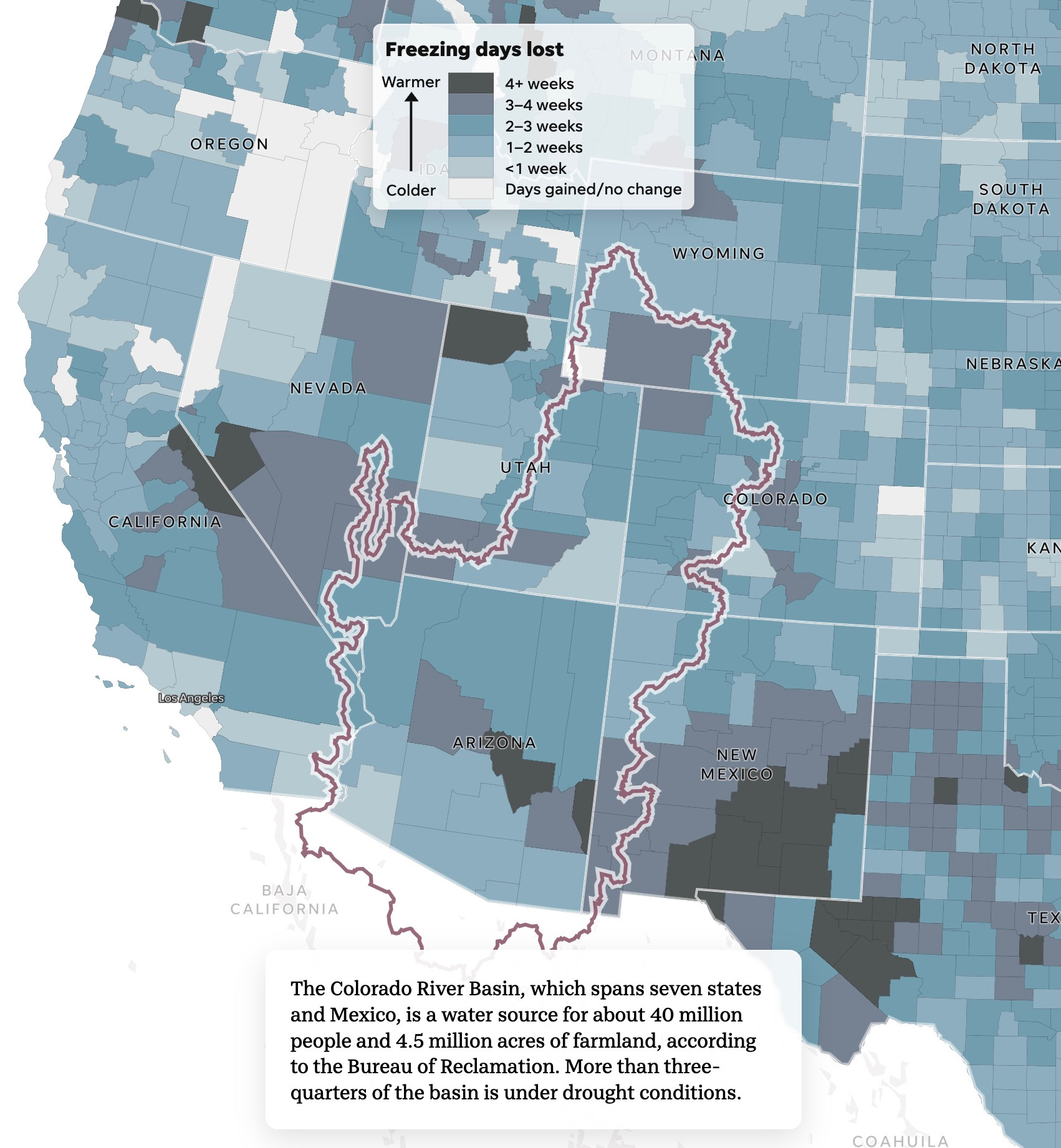
“Over the past seven decades—the span of the average human life—the number of freezing days has shrunk by weeks in most places across the United States,” according to this USA Today story with some compelling data visualizations.
The piece explains the wide-ranging impacts and includes a map that lets you see how the number of freezing days has changed in your county.
5️⃣ How Do You Measure Snow From Space? First, Climb a Mountain.
Sachi Kitajima Mulkey and Nina Riggio, The New York Times, 3/24/26
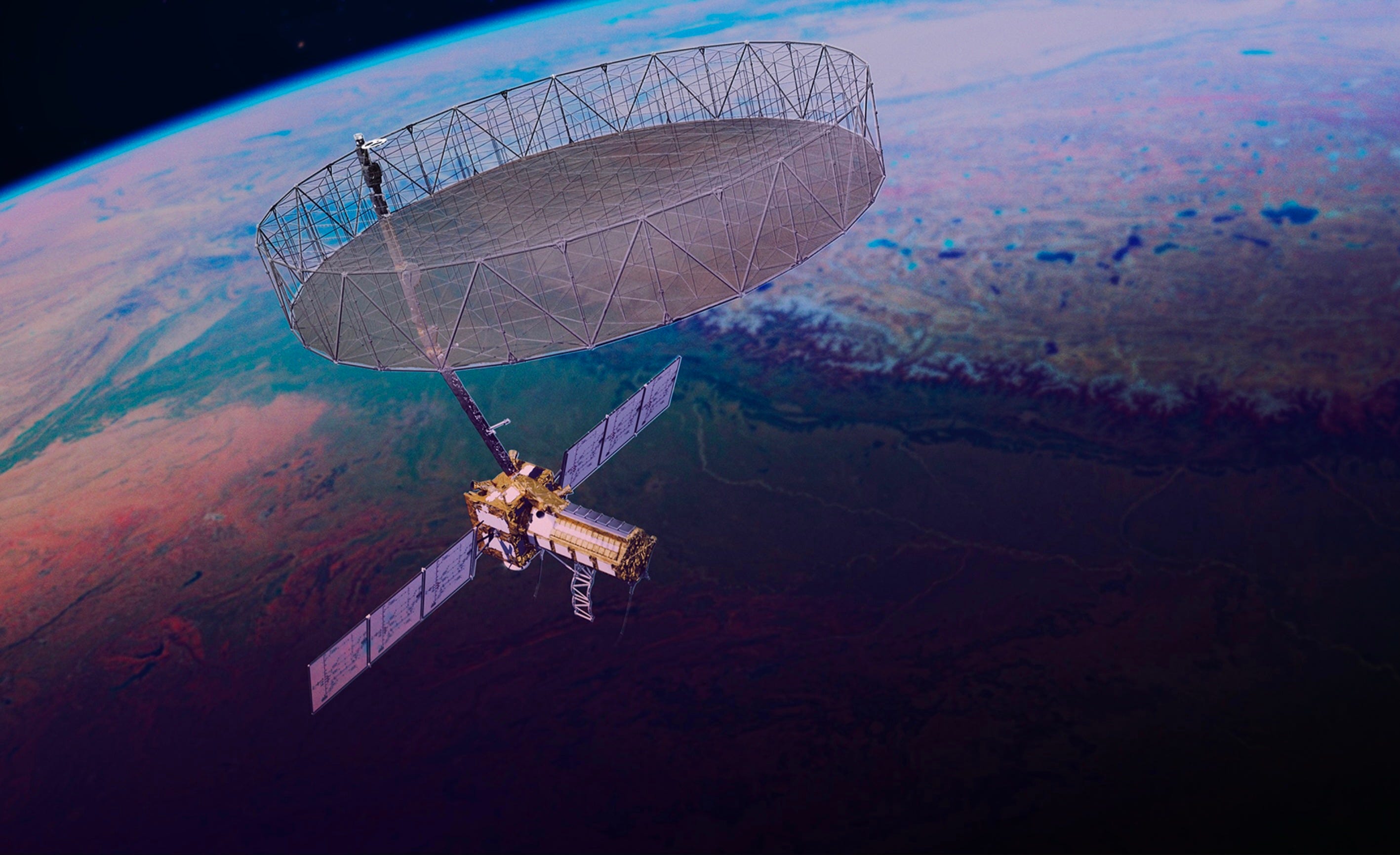
This story features great, immersive reporting and striking photos about snow researchers hoping to take advantage of the NISAR satellite, launched in 2025 by NASA and the Indian Space Research Organisation.
“The satellite’s capabilities are the closest humans have come to measuring water content in snow across vast regions, from space, the holy grail of snow science,” Mulkey writes.
To calibrate NISAR, scientists needed to measure the snowpack at around 11,500 feet on Colorado’s Niwot Ridge, so Mulkey and Riggio accompanied them on the alpine fieldwork.
6️⃣ Company claims cloud-seeding breakthrough could help the parched West
Jake Spring, The Washington Post, 4/27/26
Rainmaker, a start-up company, says its cloud-seeding drones have produced snow containing about 142 million gallons of water.
“Some scientists said it’s too soon to know if the results are legitimate, as the data has yet to be peer reviewed, and even then it is a small amount of water in the face of the West’s intense drought,” Spring writes. “But if confirmed it could be a breakthrough, making it the first commercial cloud-seeding operation to prove it made precipitation.”
Utah and Idaho are already paying Rainmaker millions of dollars annually, according to the story, and it’s the only company currently using drones, rather than airplanes, to release silver iodide into clouds to promote precipitation.
7️⃣ New Drone Tech Triggers Avalanches From the Sky
Ian Greenwood, Powder, 3/12/26
Explosives are a critical tool for avalanche control. Bombs are deployed by hand, launched by howitzers, and dropped from helicopters to mitigate danger. But that’s not without risk for ski patrollers, transportation workers, and other professionals who keep people and property safe.
Now, a company that uses drones to ignite prescribed burns to reduce wildfire risks has developed a system for triggering avalanches with a remote-controlled aircraft.
“Our mission is simple: use robotics to make the most dangerous jobs safer,” Carrick Detweiler, CEO of Drone Amplified, said in a press release.
8️⃣ New Mexico’s Time-Honored Irrigation Canals Face Existential Threat
Tina Deines, Inside Climate News, 4/21/26
“As the Rio Grande dries out months early, water managers look to blessings, prayers and groundwater to save the acequias that have spread water, history and culture to farmers and families since the 16th century,” according to this story about the impact of the low snowpack on New Mexico’s traditional irrigation systems.
There are more than 700 active acequias in New Mexico, many of which are found in the northern part of the state. “Despite their long history and cultural importance, acequias—and the people who depend on them—face an urgent threat from climate change,” Deines writes.
🏆 Snowpack stories win awards
I was excited and honored to learn that two of my Water Desk stories about the snowpack won awards in the Society of Professional Journalists’ Top of the Rockies Excellence in Journalism contest, which covers Colorado, Utah, New Mexico, and Wyoming.
In the small newsrooms category, I won first place for Science and Technology Feature for this story about a novel approach to measuring the snowpack with cosmic rays:

And I won second place for Science and Technology Feature for this piece about a controversial paper that argued for monitoring snowpack “hotspots”:

Huge thanks to Water Desk Co-Director Luke Runyon for his excellent editorial support. I’m also grateful to the scientists and other experts who helped with the reporting process. With the cosmic rays story, researchers let me tag along and photograph them, which was invaluable.
If you’re a scientist or other snow expert conducting fieldwork and wouldn’t mind a journalist observing and covering your research, I’d love to hear from you. And if you’ve published interesting work on snow, please feel free to reach out. I’m always looking for new sources and story ideas!
I just recently wrote about how climate change is impacting cross country skiing. One new advance here in North American is the use of a product called Snow Secure - an energy -saving technology developed in Finland. Here is my complete post: https://jennwoltjen.substack.com/p/the-winter-i-love-is-changing?r=19b5er&utm_campaign=post-expanded-share&utm_medium=web