In the dark humor of Wall Street, a “dead cat bounce” is a brief, deceptive resurgence in prices after a market crash.
Apologies to the cat lovers, but if you drop a dead feline from high enough, it’ll rebound. This “sucker rally,” as it’s also known, doesn’t negate the precipitous drop.
That same pattern is now playing out in the mountains of the American West. The high country is getting a burst of snowfall on April 1—a key milestone for the region’s frozen reservoir, which often peaks around that date, though the timing varies by basin.
But this late-season storminess is too little, too late. It won’t rescue a lost winter that has featured record highs for temperatures and historic lows for the snowpack.
In a more typical season, I might be shredding powder on this April 1. Sadly, Purgatory—my home mountain—shut down early on Sunday, as have some other Western ski areas.
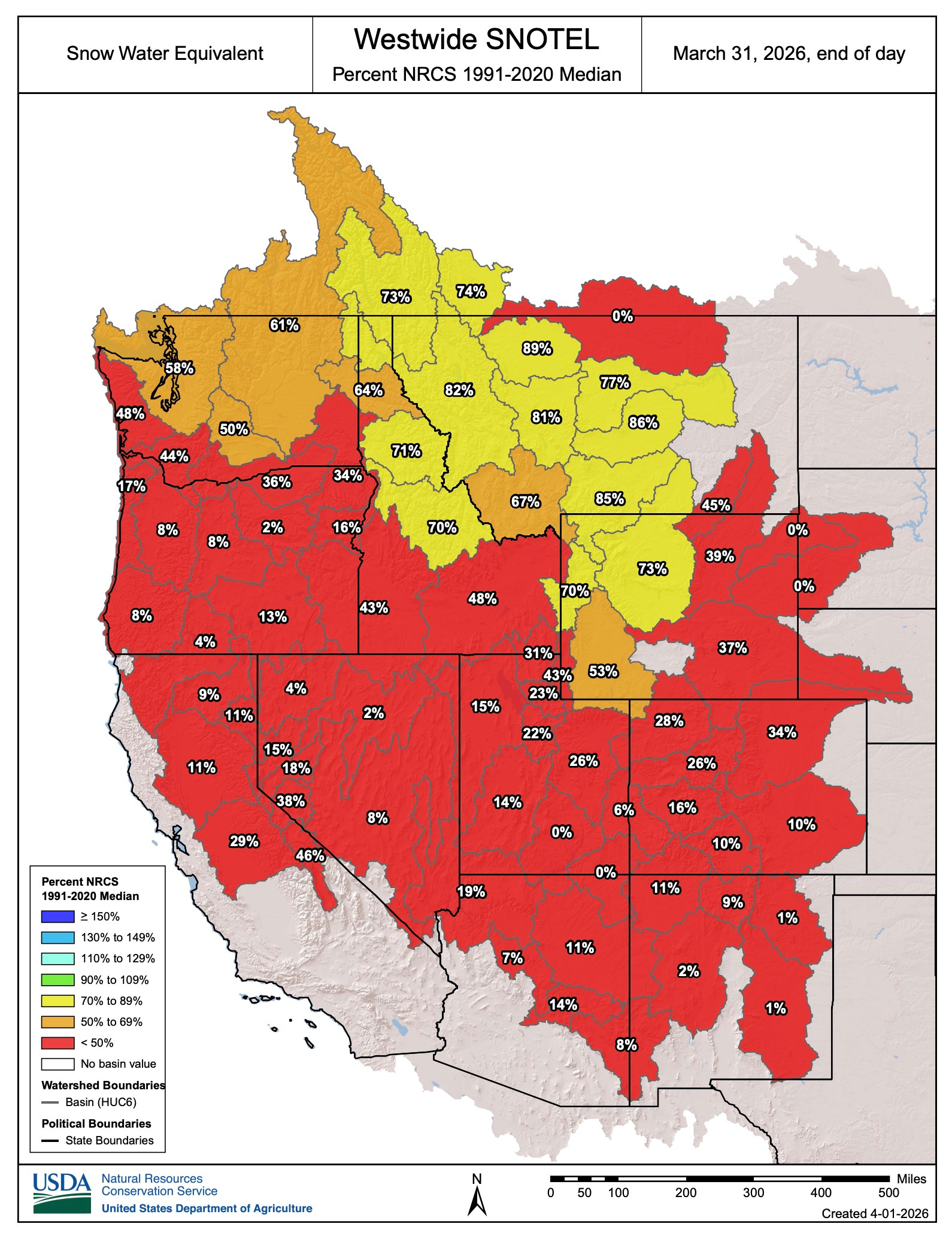
The map below paints a bleak portrait of the region’s snowpack as of March 31 (these graphics lag by a day). An already thin snow cover shriveled due to the recent off-the-charts heat waves, leaving most of the region at just a fraction of normal snow water equivalent—the measure of the snowpack’s water content.
The chart below shows Colorado’s dismal snowpack—and why experts have struggled to find superlatives to describe it. The gray band marks the record highs and lows for the statewide snowpack since 1987. The colored lines trace individual seasons over nearly four decades. The plunging black line represents the current season—an extreme outlier at just 22% of the long-term median for April 1.
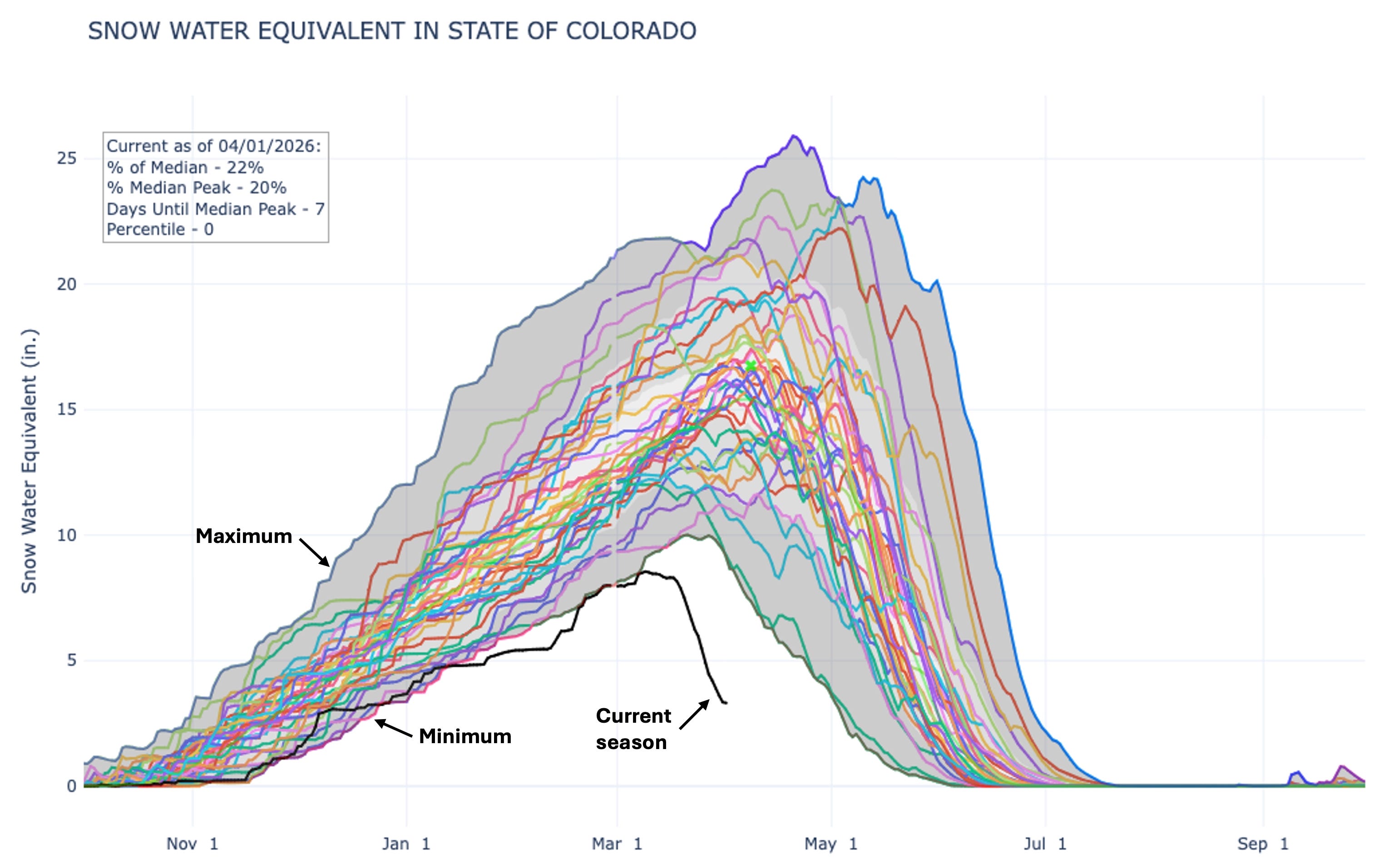
Snowfall this week may cause that black line to bounce—just like the hapless cat—but it won’t rewrite the story of this brutal season.
Colorado is far from alone in recording exceptionally low snow levels. This morning, I poured a strong cup of coffee and gathered data on 10 other Western states to create the graphics below.
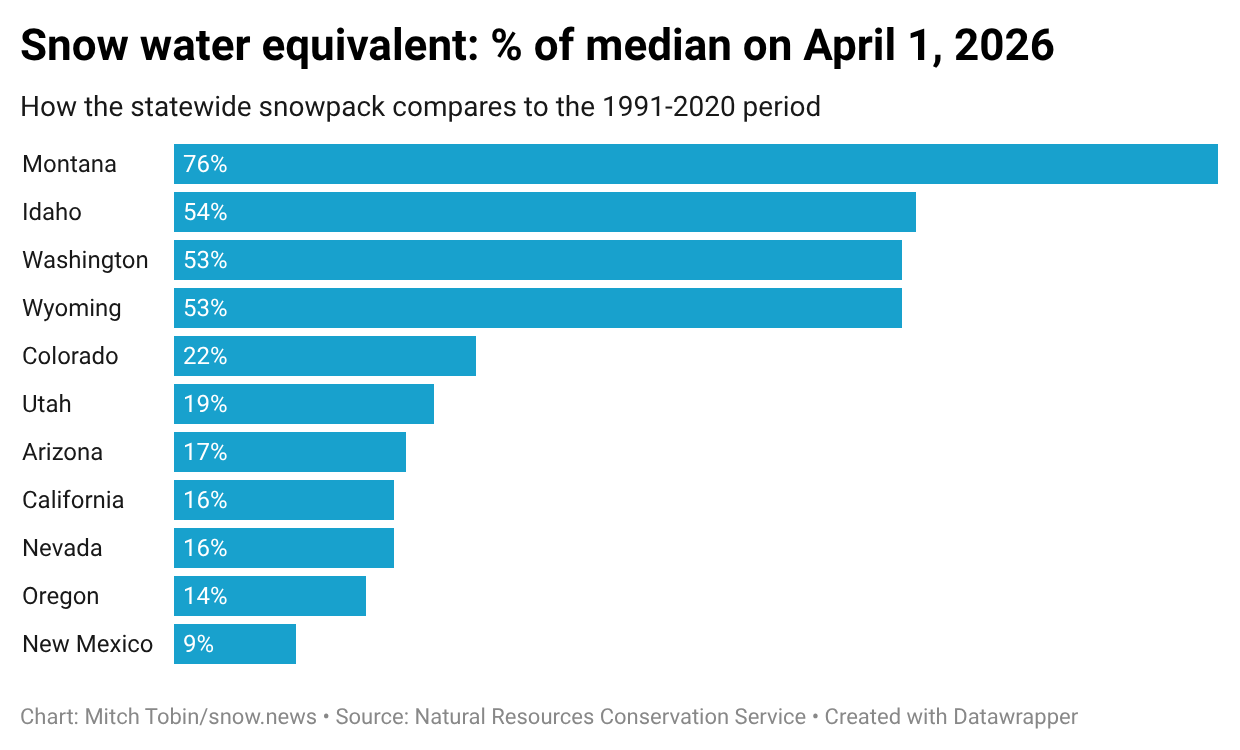
This chart shows each state’s snowpack as a percentage of the April 1 median (1991-2020).
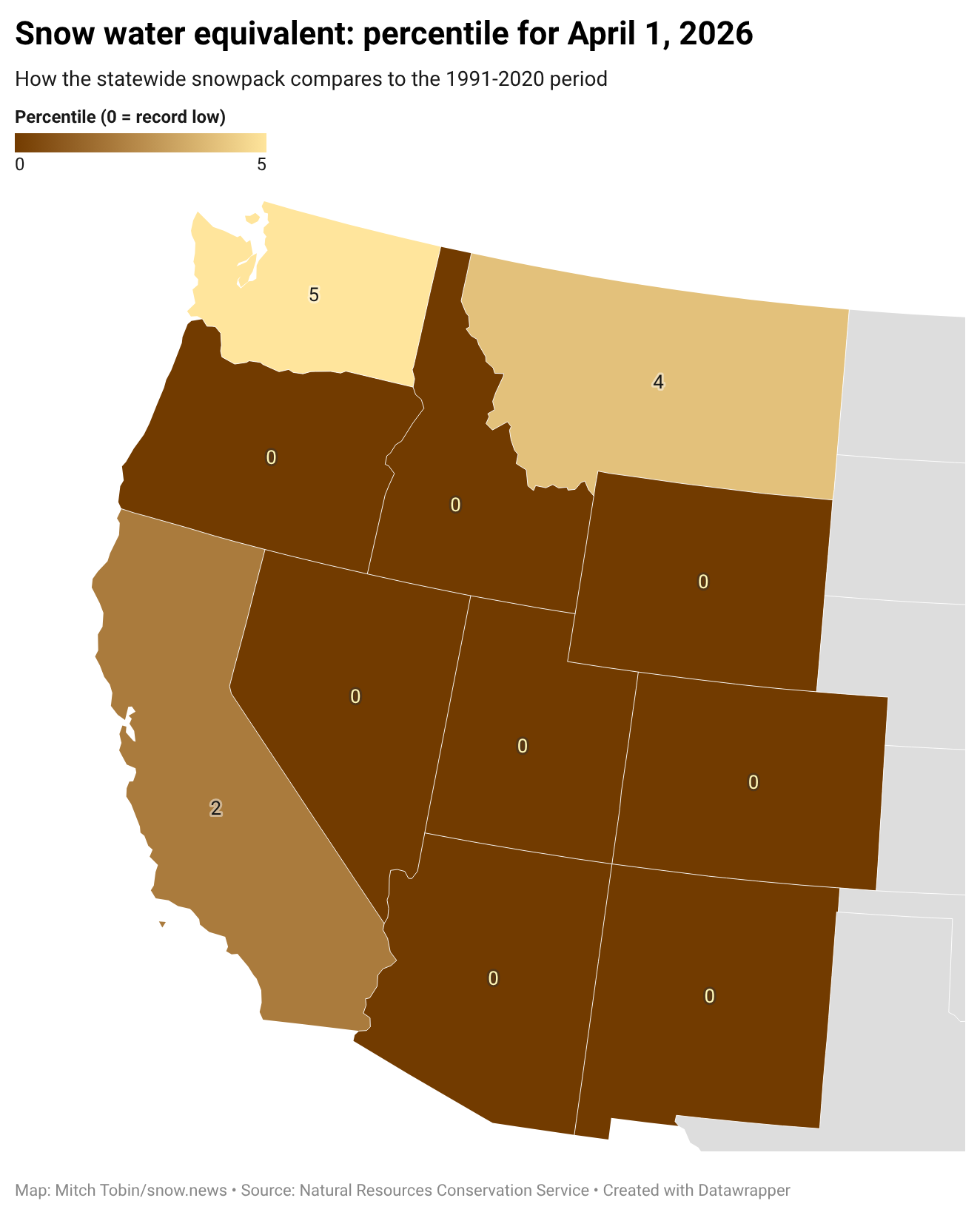
And this map shows the percentile for each state’s April 1 snowpack, with eight states at 0—the lowest on record—and Washington leading the way at the 5th percentile.
In hindsight, maybe I should have had an Irish coffee.
Midpoint in the water year
April 1 marks the midway point in the water year, which began October 1, so it’s a good time to assess how the first half has played out.
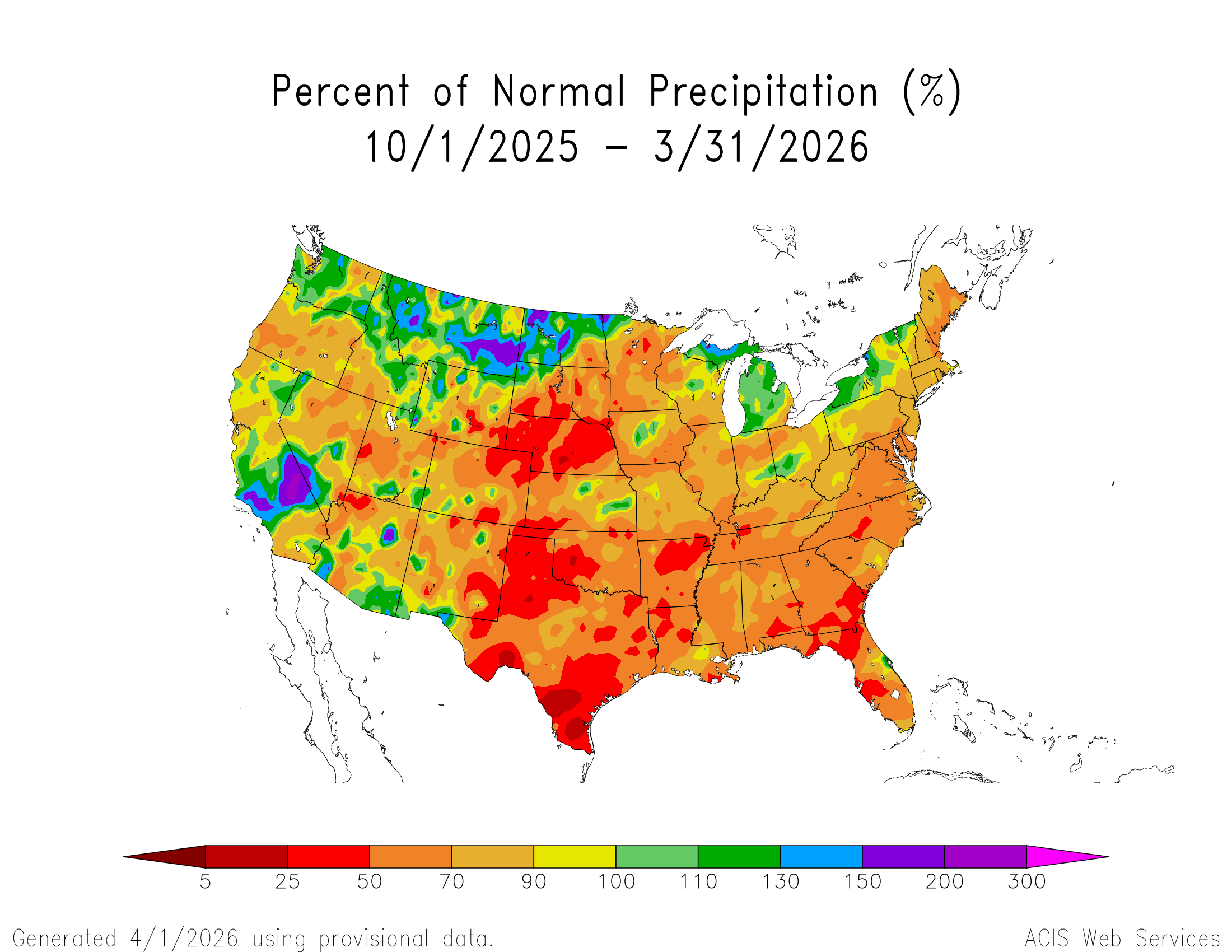
Over the past six months, precipitation has been below normal in much of the West—one key driver of the current snow drought—but some areas were above average.
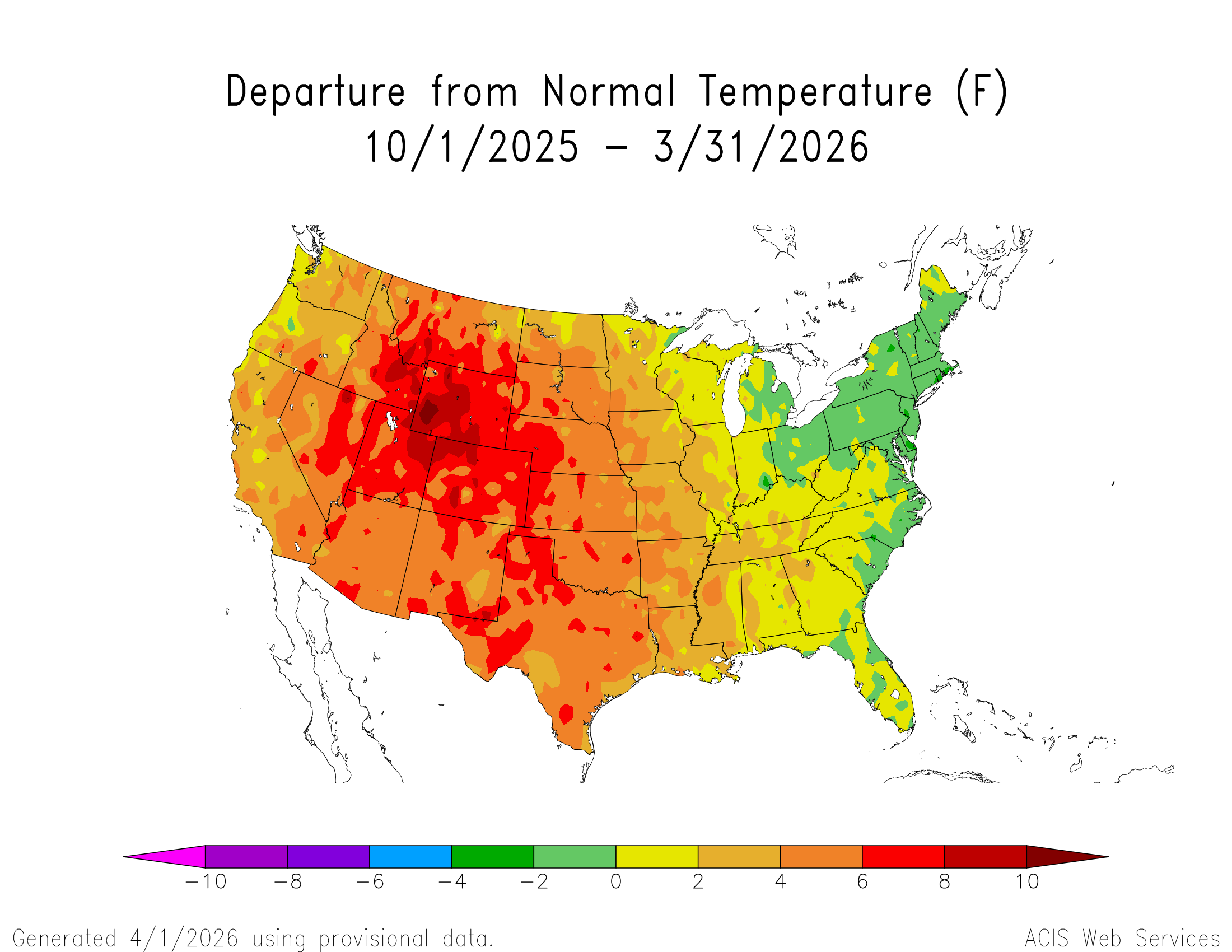
The second map shows that the first half of the 2025-2026 water year was much warmer than average in virtually the entire West, with the red shading indicating major departures from normal. Many Western states saw their warmest winter on record.
When I looked at how the weekly U.S. Drought Monitor has changed over the past six months, I expected to see worsening conditions across the West. After all, we’re being saturated by news coverage of the snow drought.
Yet the maps below show that the most widely used drought measure has actually improved in some parts of the West during this water year. This may seem counterintuitive, but as noted above, precipitation has been above normal in some locations—it’s just fallen as rain rather than snow. Recall, too, that waves of warm atmospheric rivers struck the West Coast at the end of 2025, easing drought in states such as California and Washington while they triggered flooding.
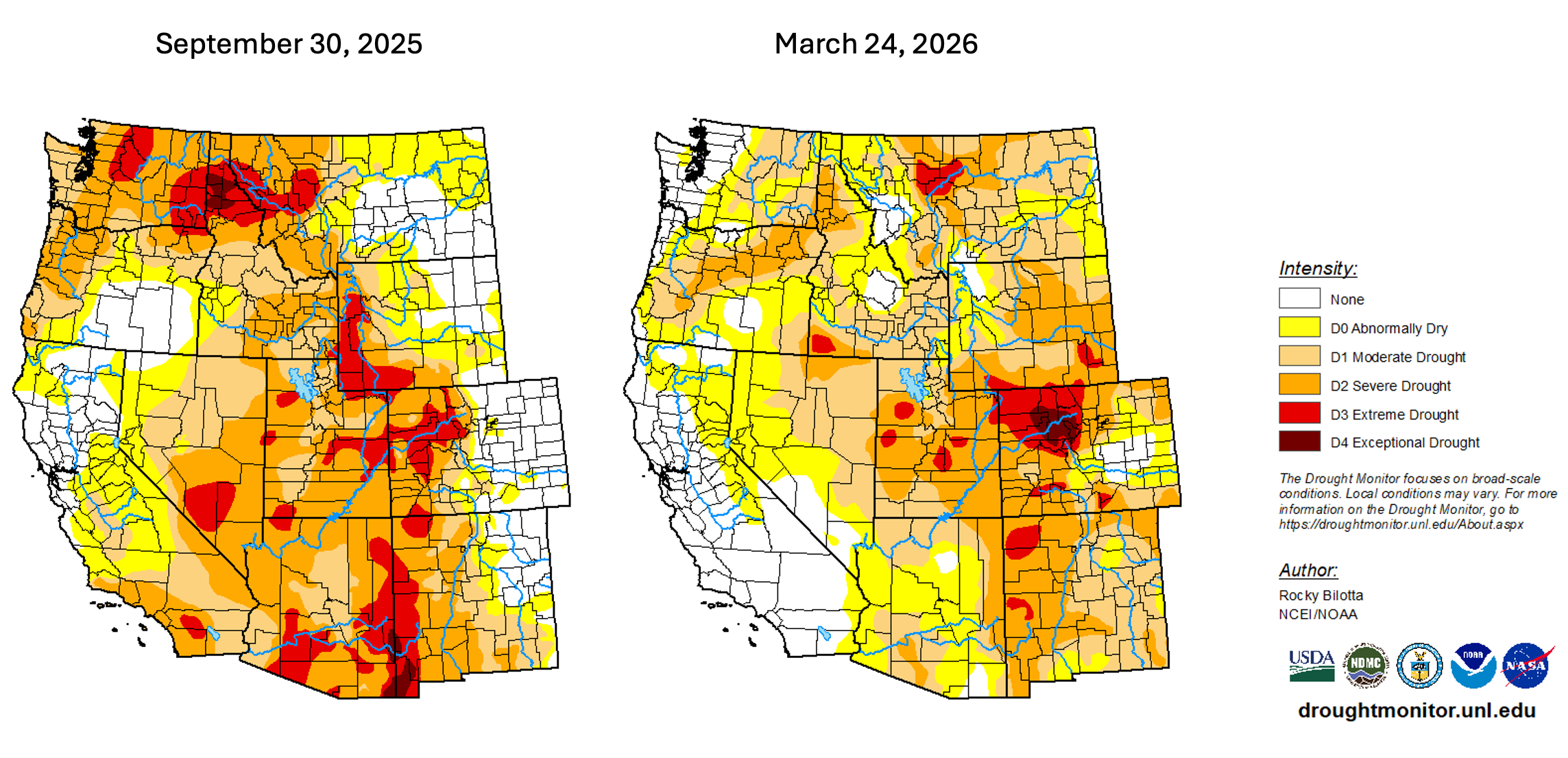
Even so, drought remains widespread in the West, and the scant snowpack is crimping the water supply in many locations. Utilities are already announcing water restrictions due to the snow drought.
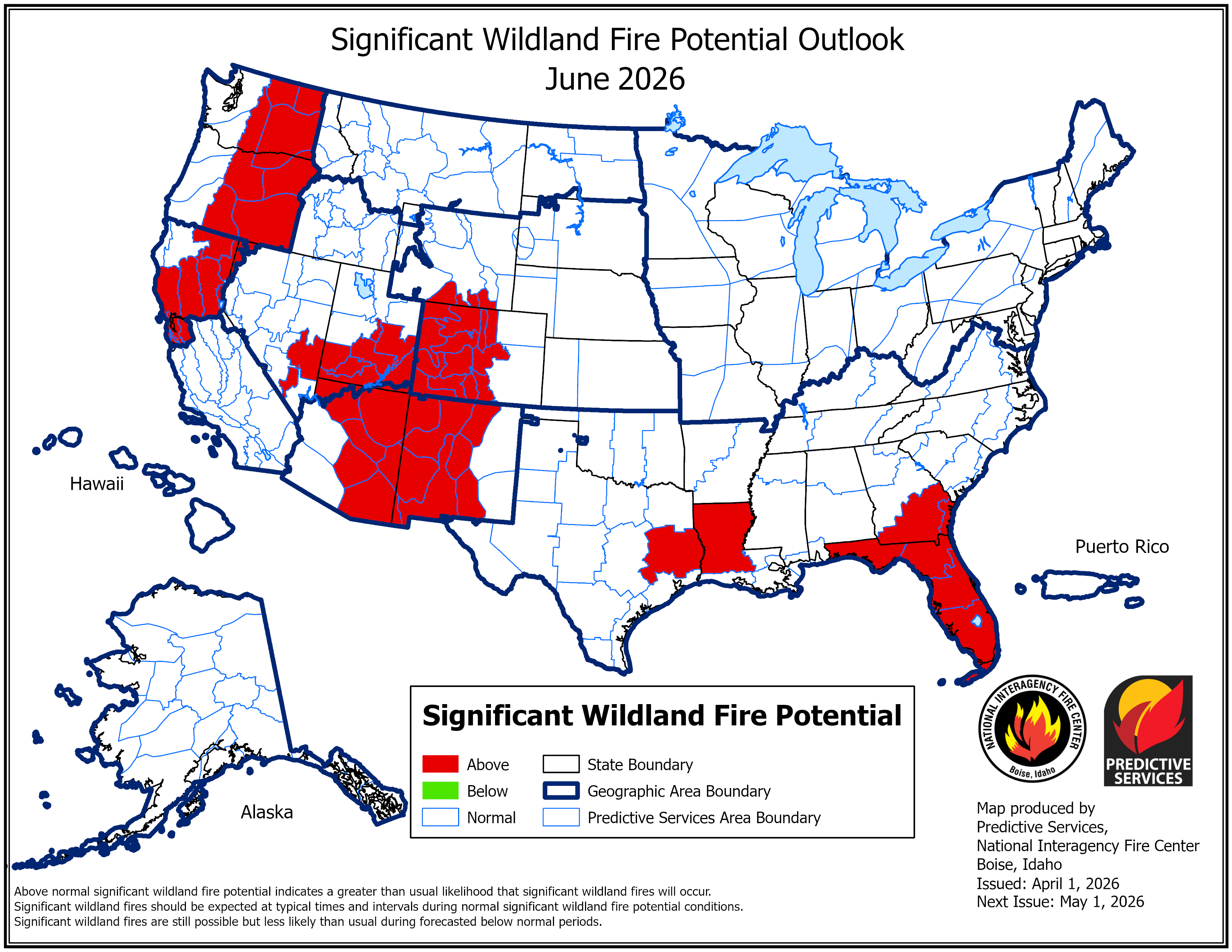
The lack of snow is also raising fears of an intense wildfire season in a region where large blazes are a risk even in average years. The map below, released today, shows what areas have above-normal potential for significant wildfires in June.
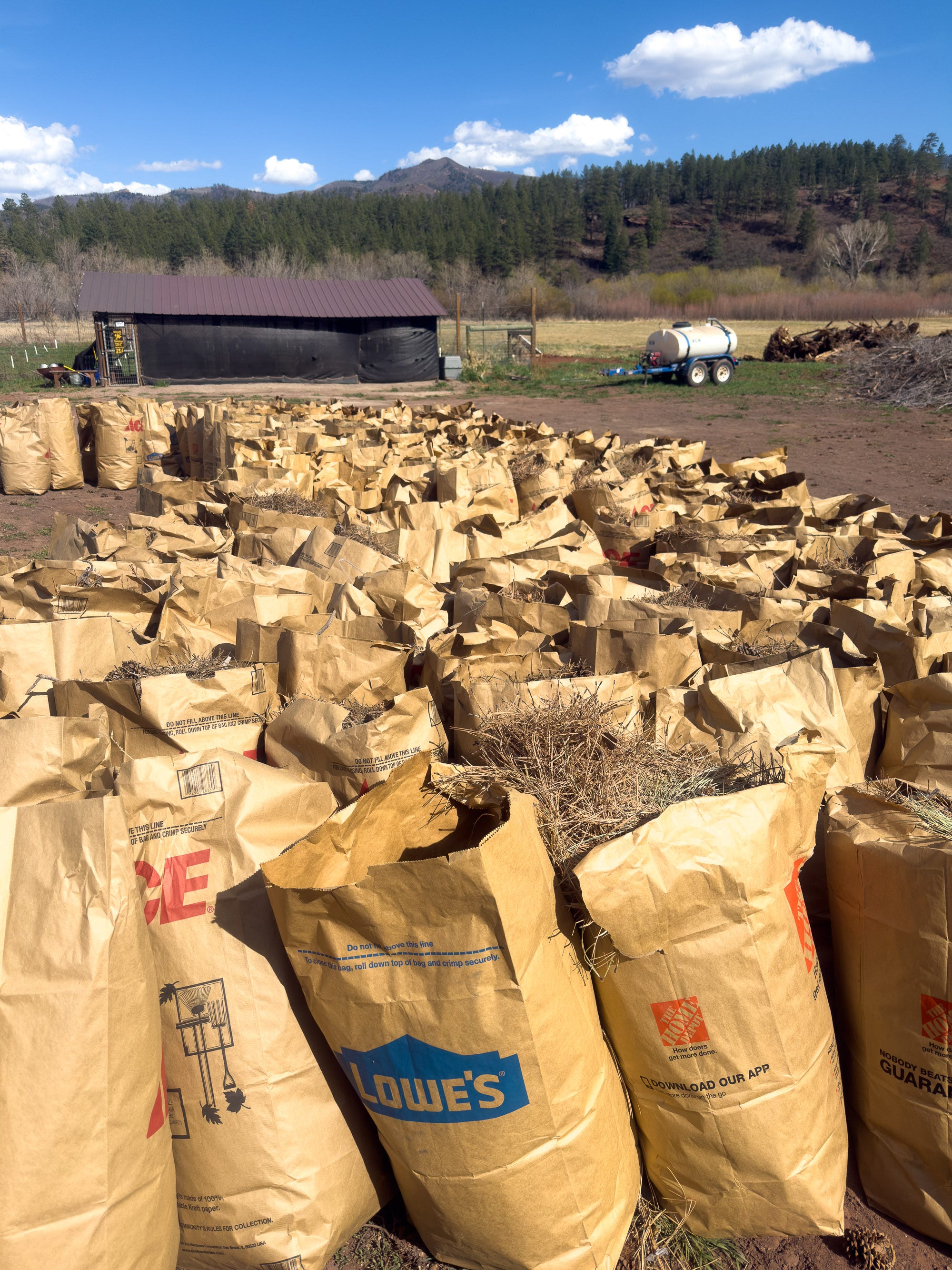
Rather than skiing, I’ve been busy raking pine needles and cones around my home in a beautiful but flammable ponderosa pine forest near Durango.
Talking snowpack in the Chihuahuan Desert
Last week, while baking in the Chihuahuan Desert in Texas, I was reminded of the far-reaching importance of the snowpack.
I was in El Paso for a training workshop for journalists interested in the Rio Grande, sponsored by The Water Desk, the initiative at the University of Colorado Boulder that I co-direct.
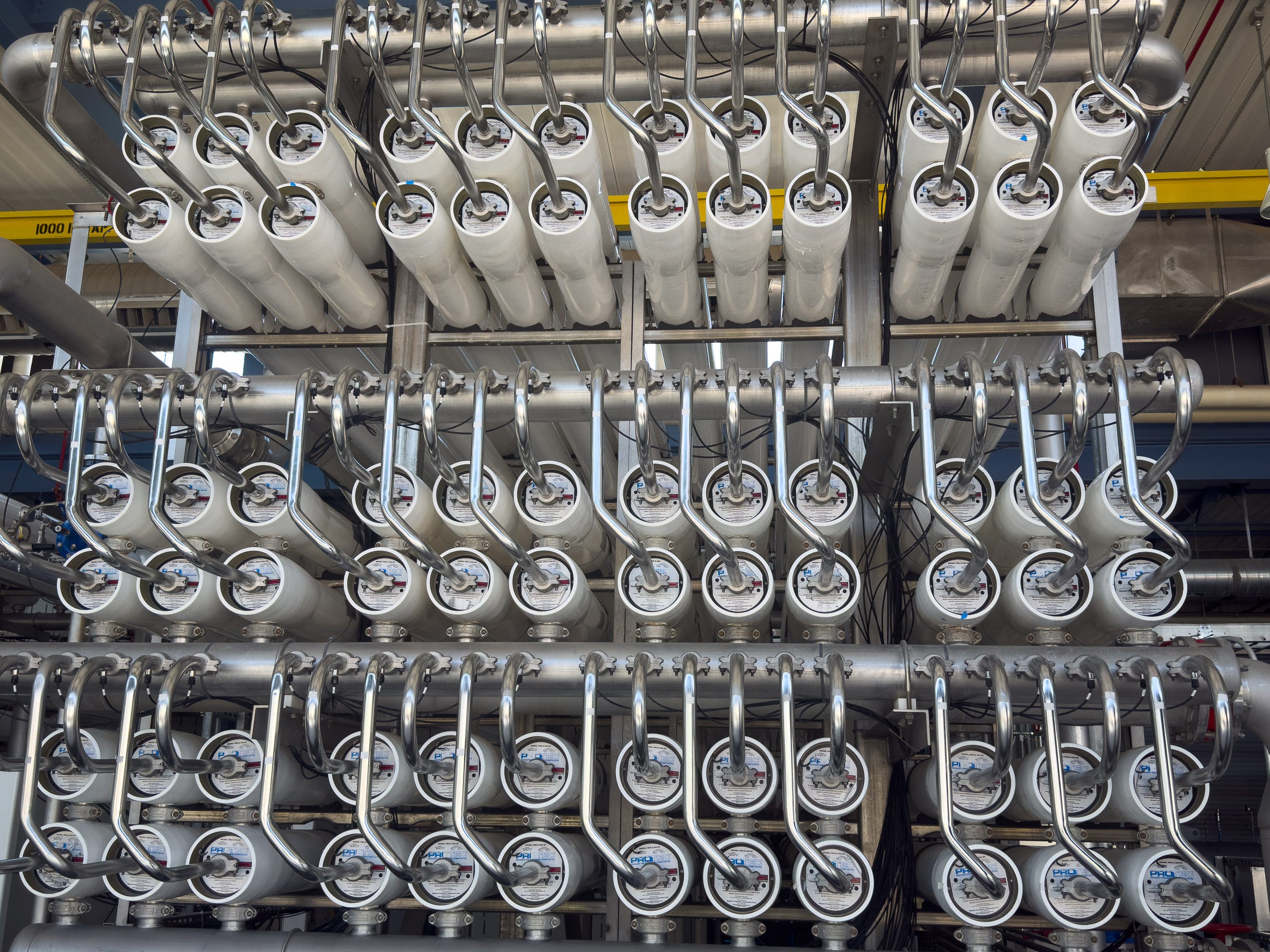
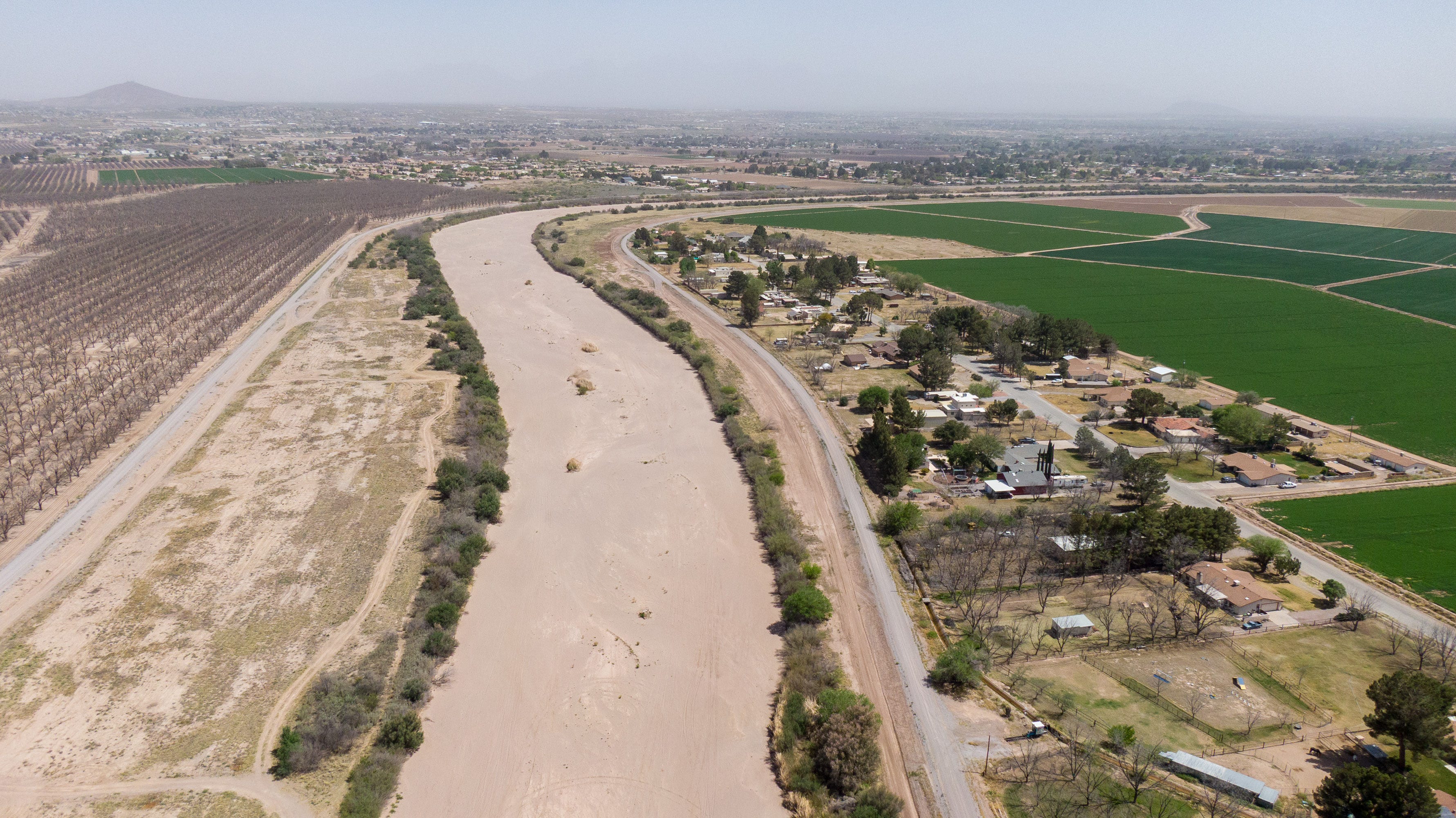
It was nearly 100 degrees, there wasn’t a drop of surface water in sight, and our group was visiting the world’s largest inland desalination plant, which removes salts from brackish groundwater to make it potable.
Officials from El Paso Water, operator of the facility, spoke about the poor snowpack in the Rio Grande’s headwaters in southern Colorado—a mighty long drive away. The Rio Grande—part of the utility’s portfolio—depends heavily on that snowmelt, which is stored upstream from El Paso in Elephant Butte Reservoir (currently 13% full).
When surface water is scarce, El Paso Water relies more on local groundwater, both fresh and brackish. It’s also now constructing a Pure Water Center that will treat wastewater to create up to 10 million gallons per day of drinking water by 2028. Other cities in the Southwest are also exploring this technology, derided by some as “toilet to tap.”
As a water nerd, I found the tour of the desalination plant fascinating—and sobering. The reverse osmosis facility, which can produce up to 27.5 million gallons per day, requires significant energy to purify the brackish groundwater. The super-salty dregs are pumped 22 miles away for disposal in a fractured rock formation thousands of feet below the surface. All told, it costs El Paso Water around $2 per 1,000 gallons produced—roughly 13 times as expensive as surface water.
The West’s snowpack generates enormous economic value simply by storing water for later use. When that supply shrinks, the alternatives are pricey—or nonexistent. No technology can replicate what the snowpack does for free.