

1️⃣ Monsoon isn’t making up for the snow drought 🥵
The Intermountain West’s water supply entered summer in lousy shape after record-low snowpack in many locations and years of persistent drought. But earlier this summer, hope sprang in some quarters that an unusually robust monsoon might ease the parched conditions.
The summer rains have certainly been welcome in the region, helping tamp down wildfires even as they triggered damaging floods and debris flows in burned areas.
Even so, an August 20 federal drought update described the monsoon as “lackluster” and concluded that “isolated monsoon rains failed to provide meaningful, region-wide relief for water supply challenges.”
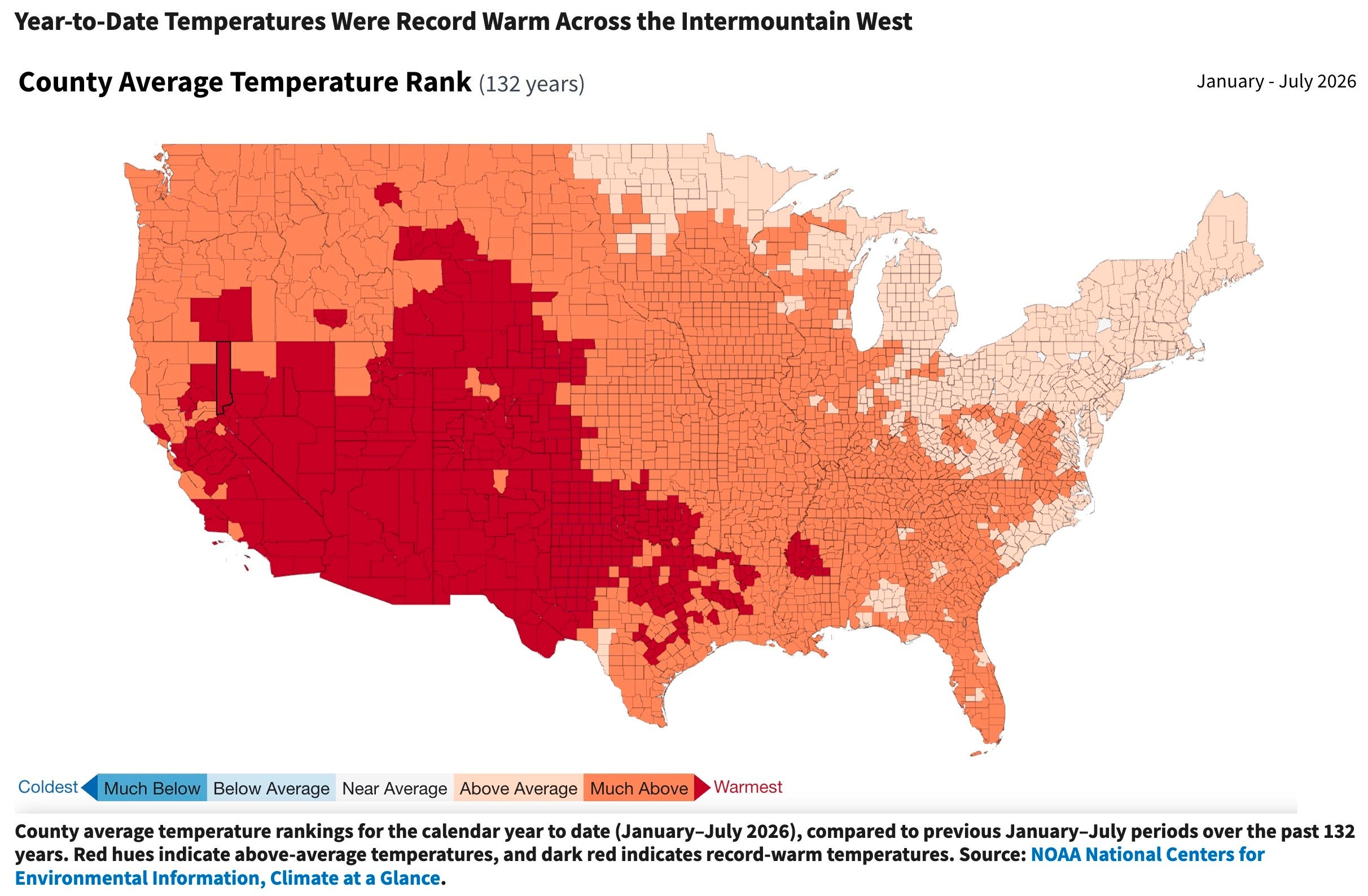
July brought exceptional, desiccating heat to Arizona, Colorado, New Mexico, Utah, and Wyoming, according to the National Integrated Drought Information System. As shown in the map below, a huge swath of the West recorded its warmest January-through-July period in 132 years of recordkeeping.
Some other lowlights from the drought update:
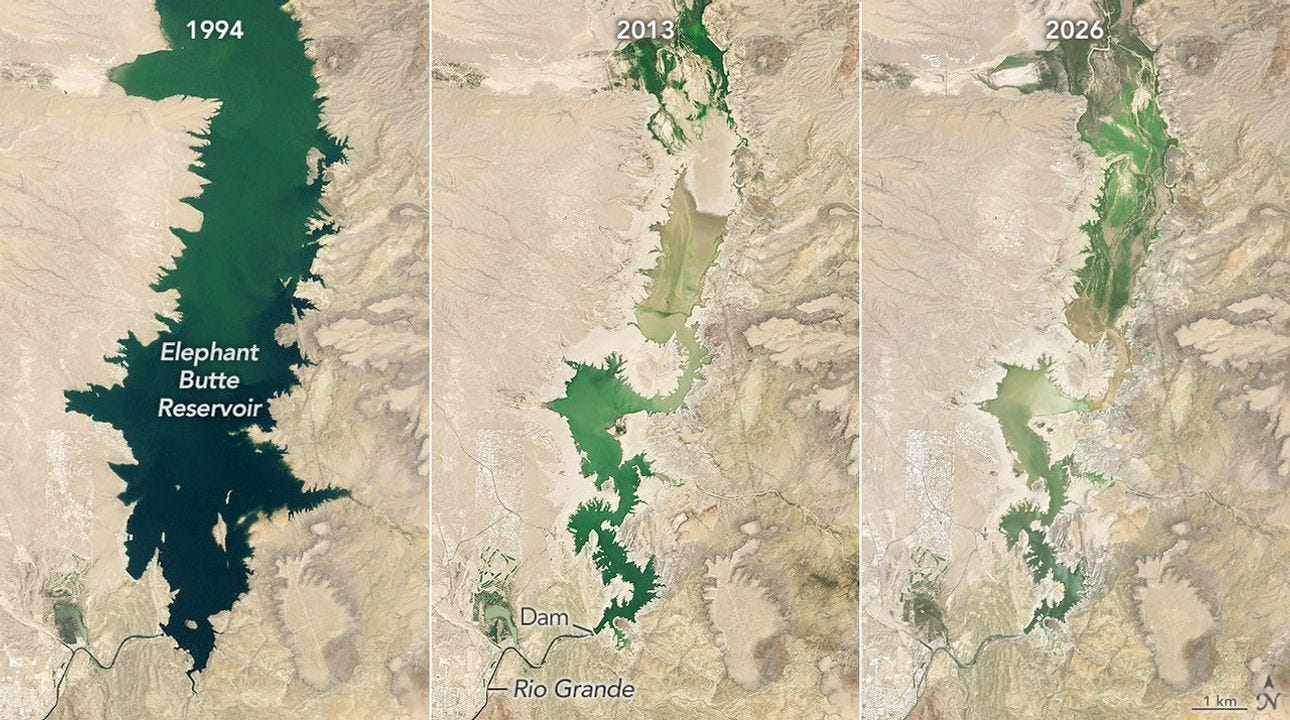
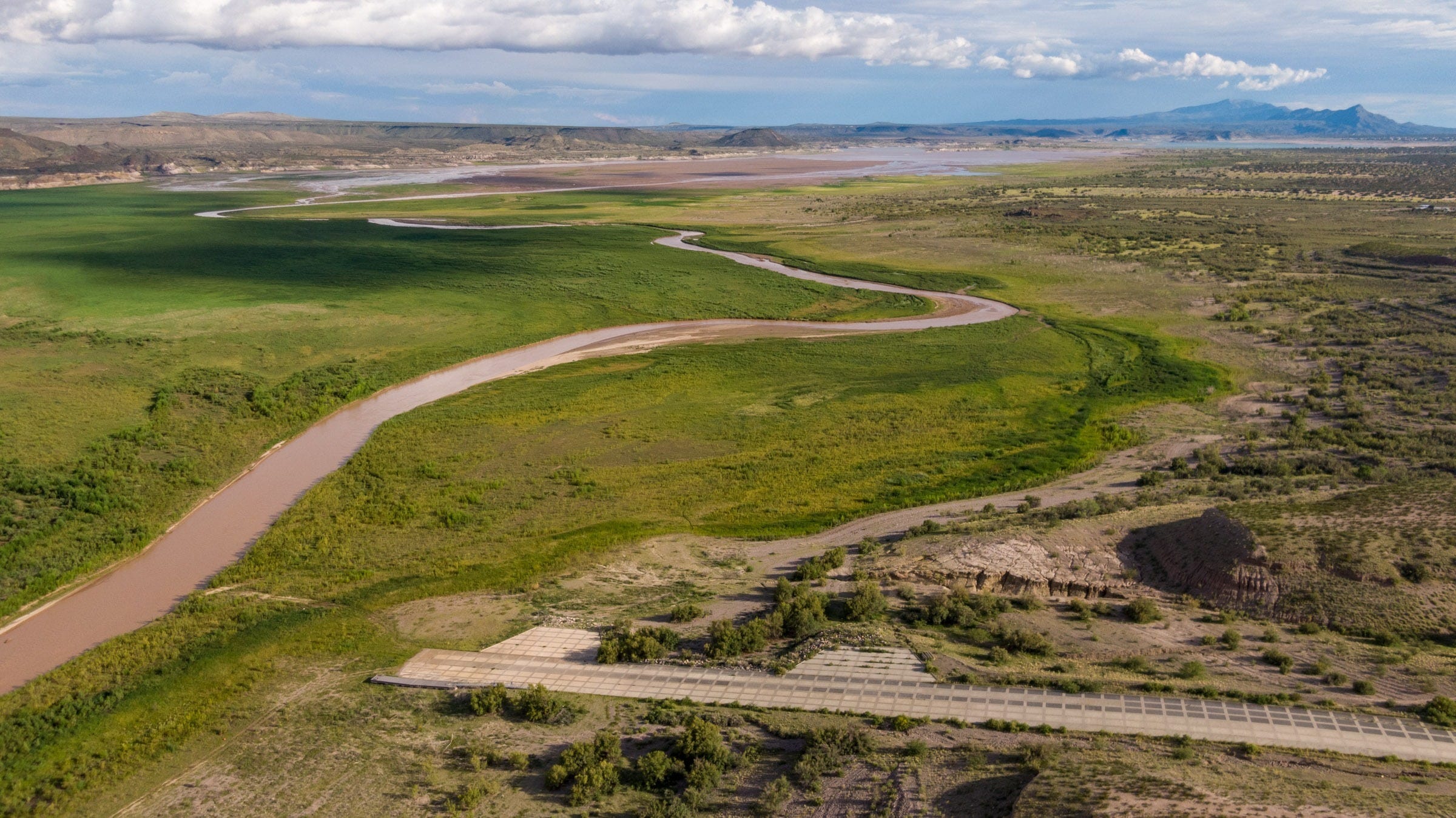
Elephant Butte Reservoir is at 1.4% of capacity, and an 82-mile section of the Rio Grande is dry.
Colorado’s Blue Mesa Reservoir, which has previously been tapped to bolster Lake Powell, is only about one-quarter full.
Nearly 95% of the five-state region is experiencing drought, with around 30% facing “extreme” or “exceptional” conditions.
The report also explains how livestock agriculture is suffering:
Producers report that, due to poor conditions of pastures and limited water in reservoirs, little to no feed is available for livestock. The reduced hay production is leading to the purchase of supplemental hay that is increasingly harder to find, and increased cost to haul hay from more distant locations. There are also reports that cattle and livestock producers are culling animals.
Along the Colorado River, the nation’s two biggest reservoirs—Lake Mead and Lake Powell—are at record-low elevations, and the federal government recently ordered significant cuts to Colorado River water deliveries to Arizona, California, and Nevada.
When I started covering Colorado River issues for the now-defunct Tucson Citizen in 1999, Lake Powell and Lake Mead were both nearly full. Even back then, there were deep concerns that a day of reckoning for the river was on the horizon, but it seemed far away. That day has arrived.
2️⃣ Winter snow predictions are already dropping ☃️
It was 96 degrees the other day, and I was reading about the outlook for snow this coming winter.
As I’ve written before, I put little faith in such long-range predictions because they’re so often wrong. Despite tremendous advances in meteorology, it remains extremely difficult to forecast snowfall in particular places many months away. Although I couldn’t resist looking at these guesses, I won’t be betting on them.
Prediction markets are booming, but I haven’t found any that let you wager on the snowpack. Polymarket has a section devoted to weather—including bets on the elevations of Lake Mead and Lake Powell. Kalshi offers markets on precipitation in a few cities. But I haven’t seen anything like “Will Vail have above-average snowfall this winter?”
If there were prediction markets for, say, Colorado’s snowpack, I’d probably pony up some cash so I could engage in an emotional hedge strategy. I’d bet on a subpar snowpack and at least make some money to soothe my sorrows if we have another bad winter. (I’ve occasionally pursued this hedging strategy in sports, betting against favorite teams to soften the blow if they lose.)
During the snow season, I frequently consult OpenSnow for forecasts because it provides lots of data and graphics on near-term weather. It’s certainly had plenty of misses over the years, leading to both bitter disappointments and joyous surprises, but I’ve found it more useful than National Weather Service products—and easier on the eyes than a government website.
OpenSnow also ventures into long-range forecasting, so for what it’s worth, below is its outlook for this winter.
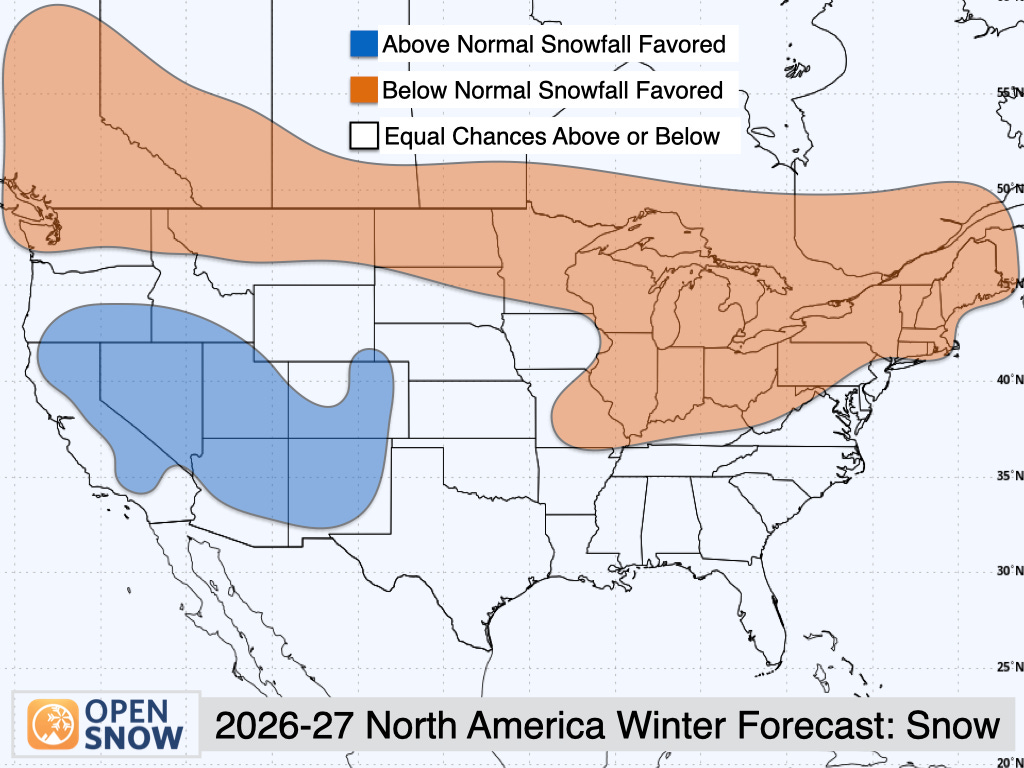
Meteorologist Alan Smith’s August 11 post goes into much greater detail for North America, Europe, and Japan, while also emphasizing that “winter outlooks contain an inherent degree of uncertainty since so many factors in the atmosphere are not predictable months or even weeks in advance.”
“A well-advertised, and potentially historic, super El Niño emerging this season played a big role in putting together this season’s outlook,” Smith writes. “We most strongly considered past strong to super El Niño winters with a similar distribution of sea surface temperatures to this one in the Equatorial Pacific Ocean, while also examining other oceanic and atmospheric signals, as well as seasonal model data, in producing this outlook.”
El Niño has been receiving saturation coverage in recent months, and forecasters expect this potentially historic event to shape weather patterns around the globe. In the American West, the short story is that El Niño generally tilts the odds toward drier winters in northern areas and wetter conditions in the Southwest. Those tendencies are not guarantees, and the picture is muddled for intervening states like Colorado and Utah.
I hope the map above proves accurate because I live and ski in the blue zone. I’d be psyched to hit some ski resorts in New Mexico or make my first visit to Arizona Snowbowl. But it’s not like I’m making hotel reservations in August.
I will spare you the new crop of predictions peddled by almanacs geared toward farmers since these publications are as unscientific and unreliable as astrology and groundhog-based forecasts. But in the summer doldrums for snow sports media, these almanac maps are like catnip. Outlets swarm over the forecasts like flies to bullshit, sharing outlooks based on secret formulas. The Farmers’ Almanac says it considers factors such as the moon’s tidal action and the alignment of planets.
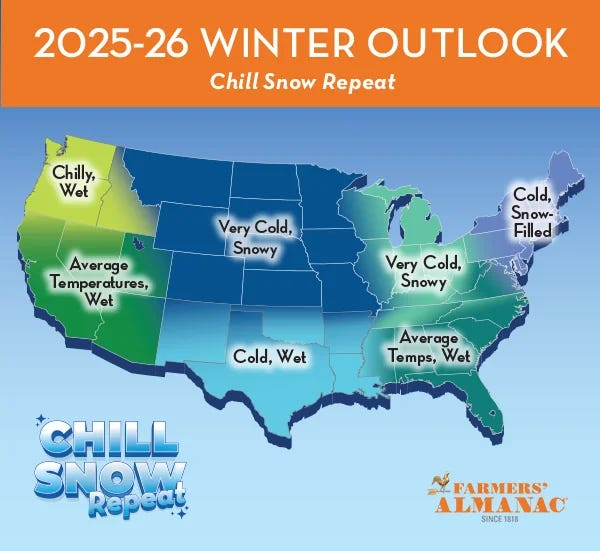
The graphic below shows last year’s winter outlook from the Farmers’ Almanac, which says it uses a formula developed in 1818—when James Monroe was president. Across the American West, this forecast was a colossal failure. Its dubiously drawn, state-based regions carried labels such as “chilly,” “very cold,” and “average temperatures.” In reality, the West experienced record-breaking winter warmth. Colorado was projected to be “snowy” but actually had its worst snowpack in generations.
For more on the perils of predicting winter snowfall in summer, check out the post below that I wrote in 2023:

3️⃣ PFAS linger in ski-wax rooms despite bans ⚠️
For decades, the “forever chemicals” known as PFAS were an ingredient in many of the waxes applied to the bases of skis and snowboards to improve their gliding. Later, scientists began detecting PFAS in humans and linking exposure to health problems.
“When skis are waxed, tiny particles and chemicals—including PFAS—can become airborne,” according to an interesting piece in The Conversation by Kathryn Crawford, assistant professor of environmental health at Middlebury College. “Scientific research has suggested associations between PFAS and numerous adverse human health effects, including increased risks of thyroid, liver and cardiometabolic diseases, along with certain cancers.”
Racing organizations eventually banned fluorinated waxes, while some governments restricted their use. But research by Crawford and colleagues has found these persistent chemicals are still present in wax rooms.
“Research shows that even tiny amounts of PFAS can pose risks to human health. The latest research suggests people working in wax rooms and in the vicinity still face ongoing PFAS exposure risks,” Crawford writes. “Some skiers still have fluoros in their wax collection and may be inclined to use them from time to time.”
The piece notes that PFAS waxes were “beloved among skiers” because they performed so well, especially on wet or sticky snow. Manufacturers have turned to alternatives, but “what will be in these waxes—and whether they will be less harmful to human health and the environment—are open questions,” Crawford writes. “Wax formulations are typically proprietary and shielded from disclosure by intellectual property and confidential business information laws.”
Crawford offers some common-sense advice for safer waxing, including stopping the use of old PFAS products, working in a well-ventilated space or outside, wearing a mask or respirator, avoiding eating or drinking, and cleaning to remove dust.
“Wax ’em up!” is a popular rallying cry when skiers and snowboarders see the season’s first snow. Just be sure you’re not exposing yourself to harm in the process!
4️⃣ New approaches to cloud seeding 🌨️
Water managers and others in the West have long tried to coax more rain and snow out of the sky by “seeding” clouds with chemicals. Traditionally, this weather-modification strategy has used silver iodide to boost precipitation.
During the 2025-26 winter, Rain Enhancement Technologies shot charged ions into the atmosphere in southeast Utah and claims it increased the snowpack’s water content in the La Sal Mountains by more than 20%. The company says its technology produced 8,750 acre-feet (2.85 billion gallons) of additional water. It estimated the cost at $10 per acre-foot under a 10-year payment plan, far below the cost of many conventional water-supply projects.
“But the ion stations have also sparked skepticism from some researchers, who say industry is too far ahead of the science,” according to Shannon Mullane at The Colorado Sun.
Katja Friedrich, a cloud microphysicist at the University of Colorado Boulder, told Mullane, “I have more questions about this than I have answers.”
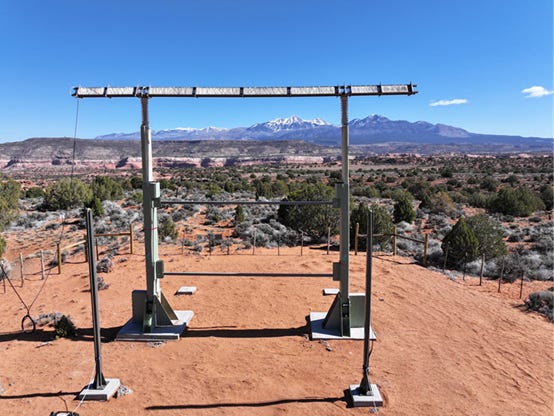
Scott Dance at The New York Times reports that “there’s been a flurry of companies developing new seeding materials that they say are cheaper and less toxic than silver iodide.”
“Some are using drones to scatter them within clouds, rather than spreading them from airplanes or ground-based launch systems. They say their technologies can be used on more types of clouds and in different weather conditions, which means more chances to make it rain or snow,” Dance writes.
Meanwhile, water leaders in Arizona are questioning whether they should continue paying for cloud seeding in the Rocky Mountains to increase Colorado River flows now that the federal government has ordered steep cuts to Arizona’s water deliveries (but imposed no mandatory reductions on Upper Basin states such as Colorado).
At an August board meeting of the Central Arizona Project, which operates a 336-mile canal that moves Colorado River water across the Sonoran Desert to the Phoenix and Tucson areas, “the cloud seeding program got caught in the middle of bigger water politics,” reports Alex Hager at KJZZ:
“I know we’ve been funding this for almost 20 years, and now everybody’s trying to cut us off,” said Barbara Seago, a CAP board member representing Maricopa County. “So my take is, why would we keep funding anything that benefits Colorado if they’re willing to cut us off?”
Hager writes that “in recent years, water agencies in Arizona, California and Nevada have sent about $1.5 million per year to upstream cloud seeding work.” The Central Arizona Project expects to decide on its participation in cloud seeding in September.
SnowSlang: Q is for “Quaternary”
SnowSlang is my occasional look at the language of snow. More at snowslang.com.
It hasn’t felt like it this summer, but in the vast sweep of geologic time, Earth is currently in one of the colder phases in its highly variable climate history, even as the planet warms due to human greenhouse gas emissions.
At times in the deep past, the Arctic Circle lacked snow and ice. Around 50 million years ago, it was home to “crocodiles, palm trees, and sand tiger sharks,” journalist Peter Brannen writes. He adds that “in waters that today would surround Antarctica, sea-surface temperatures might have topped an unthinkable 86 degrees Fahrenheit, with near-tropical forests on Antarctica itself.”
The planet has alternated between hothouse and icehouse states and even experienced “Snowball Earth,” when ice covered all of its surface or nearly so.
Back and forth it went over the eons.
We’re now living in a relatively cool geological period known as the Quaternary, which began about 2.6 million years ago and has been marked by repeated advances and retreats of glaciers that sculpted the underlying terrain. If Earth’s history were compressed into a single year, the Quaternary began around 7 pm on New Year’s Eve.
Confusingly, the Quaternary is the third—not the fourth—period of the Cenozoic Era (an older naming system included a preceding Tertiary period). The Cenozoic started about 66 million years ago and is often called the Age of Mammals because these creatures rose to prominence after the extinction of the non-avian dinosaurs.
As I noted in an earlier SnowSlang post, the recurring glaciations of the Quaternary are paced by the Milankovitch cycles. These slow variations in the shape of Earth’s orbit, the tilt of its axis, and the direction that axis points alter the amount and seasonal distribution of sunlight reaching different parts of the planet.
The map below shows the extent of ice in North America about 20,000 years ago, during the Last Glacial Maximum.
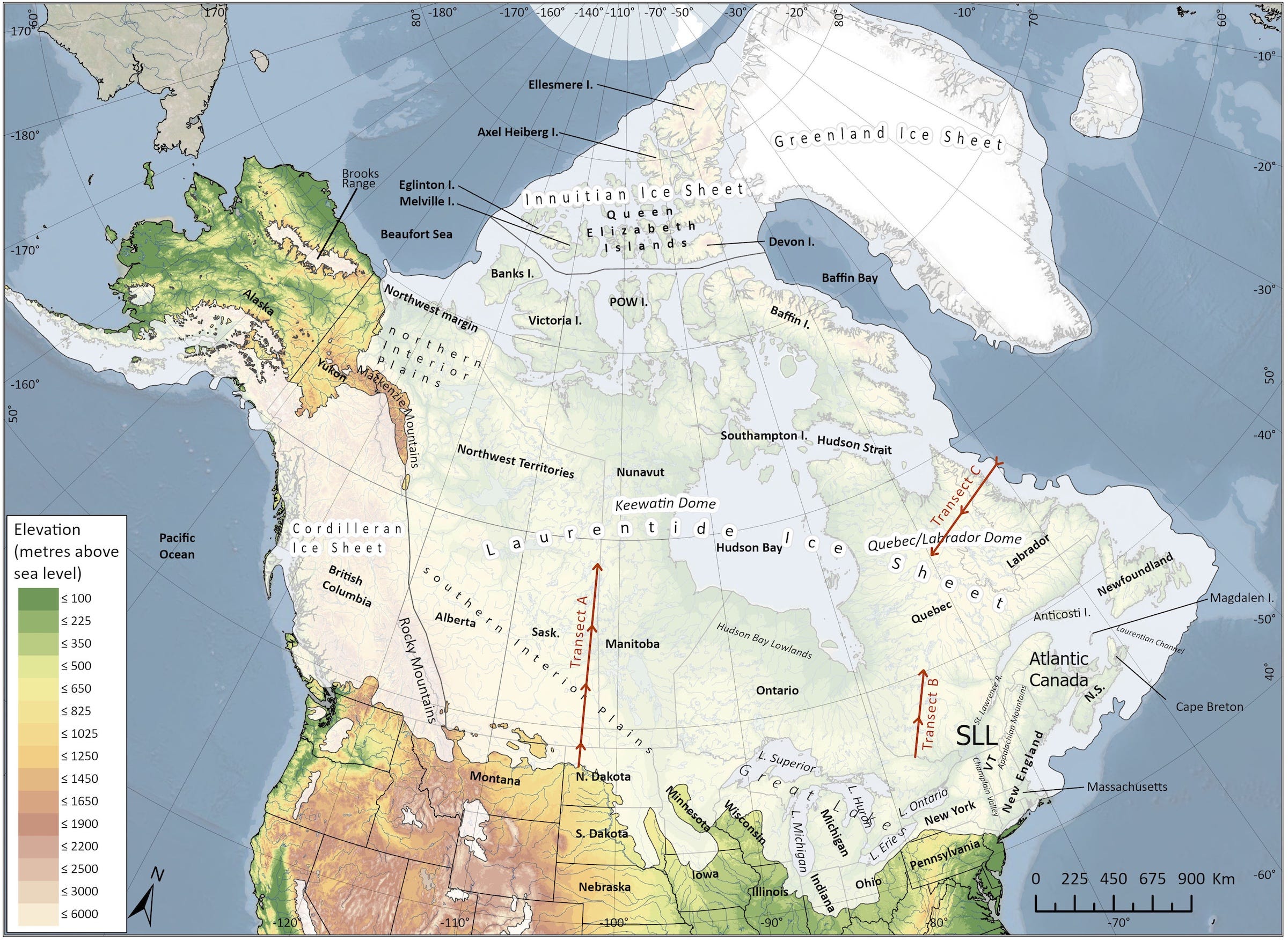
My childhood home, Long Island, was profoundly shaped by the Laurentide Ice Sheet. Two terminal moraines—ridges of debris deposited along the glacier’s edge—form the island’s backbone and forks.
Today, the snow.news headquarters near Durango sits just west of a valley that the great Animas Glacier helped carve. This river of ice was up to 2,000 feet thick as it flowed downstream from the San Juans, grinding away rock and transforming the landscape I inhabit today.